
Many property owners are often puzzled when they notice that the date mentioned in the Encumbrance Certificate (EC) does not match the property registration date.
This discrepancy is quite common and occurs because the EC reflects the date of execution of the document, not the date of registration.
UNDERSTANDING THE DIFFERENCE BETWEEN EXECUTION DATE AND REGISTRATION DATE
When a property transaction takes place, two important dates come into play:
- Date of Execution: This is the date when the parties involved (buyer and seller) sign and execute the deed.
- Date of Registration: This is the date when the executed deed is officially registered at the Sub-Registrar’s Office (SRO).
The confusion arises because the EC system records transactions based on the execution date, which represents the actual day the agreement was finalized between the parties.
REAL-LIFE EXAMPLE WITH SUPPORTING EVIDENCE
Let’s consider a practical scenario to understand this better:
- The deed was executed on 02-12-2024, which means the buyer and seller signed the document on this date.
(Execution date highlighted in the image below)

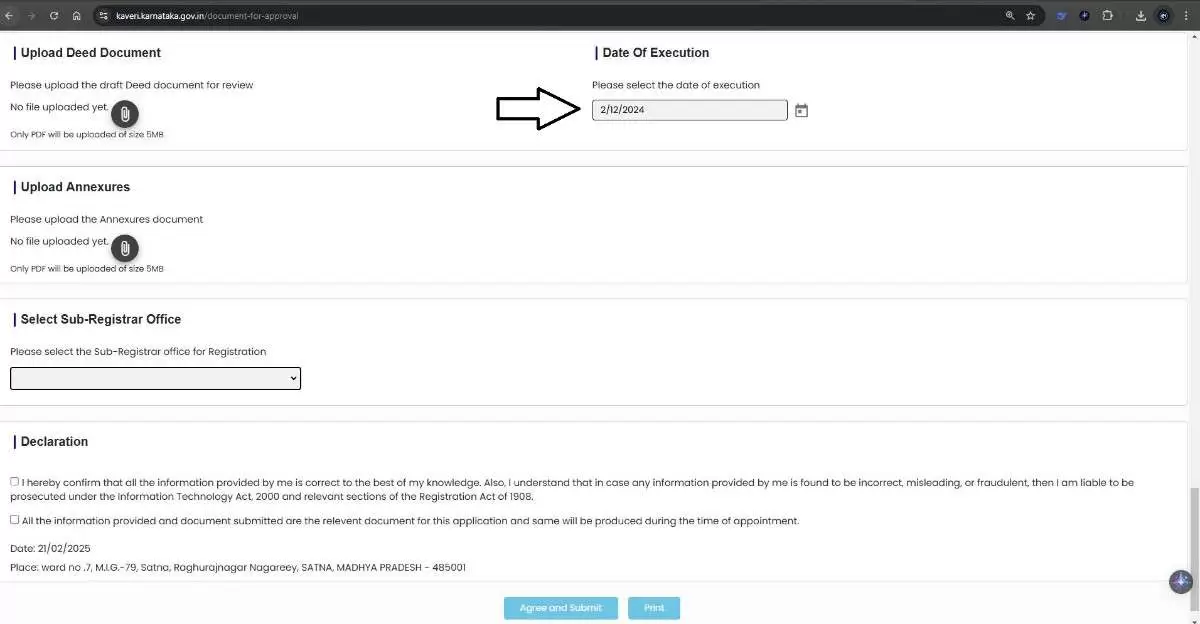
- While submitting the registration application, the execution date (02-12-2024) was entered as required.
(Execution date highlighted again during application submission)
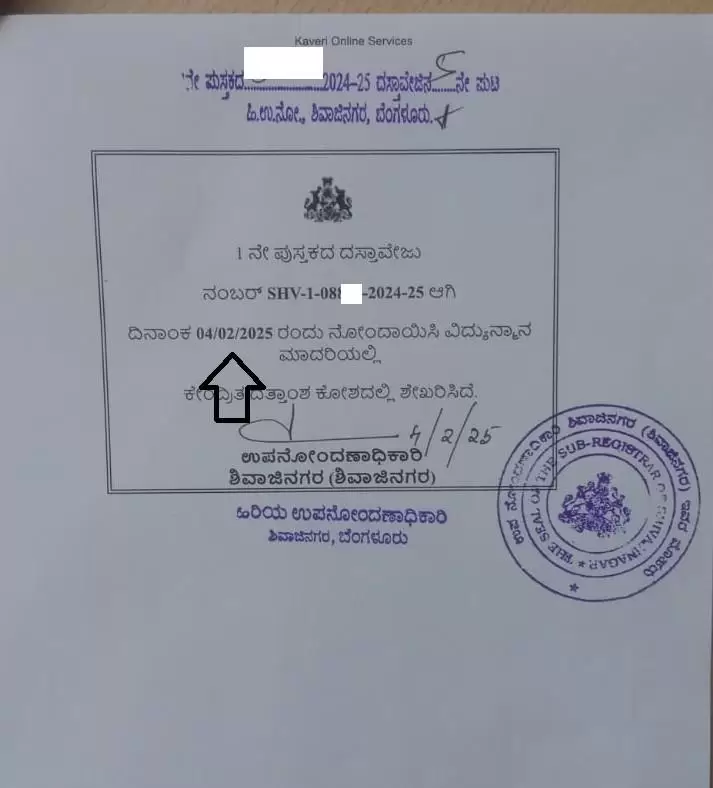
- The deed was officially registered on 04-02-2025 at the Sub-Registrar’s Office.
(Registration date highlighted in the registered deed)
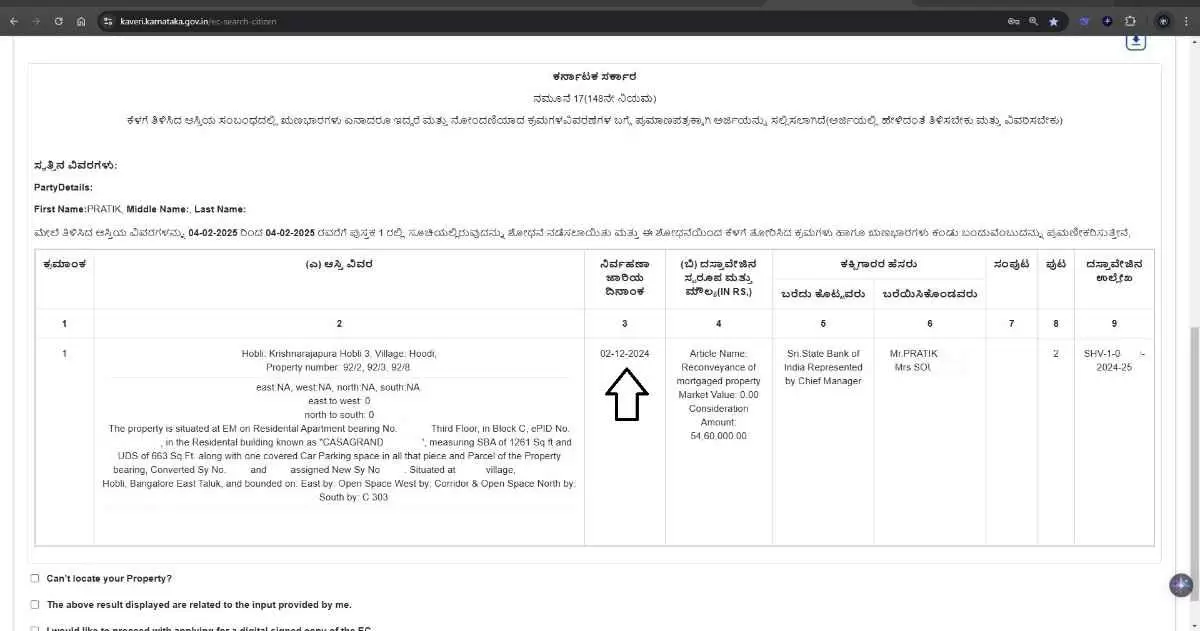
- When the Encumbrance Certificate (EC) was later downloaded, the date displayed was 02-12-2024 — the execution date, not the registration date.
(Execution date highlighted in the EC below)
COMMON MISCONCEPTION ABOUT EC DATES
Many people mistakenly believe that the EC should display the registration date. However, as per the property registration system, the EC always records the execution date because it signifies the actual transaction date, when the ownership transfer was agreed and executed between the parties.
The registration process merely validates and records that the executed document legal at a later date.
FINAL THOUGHTS
Understanding this distinction can help prevent unnecessary confusion while verifying property details.
If your EC shows a different (or what seems like an incorrect) registration date, it’s not an error; it simply indicates the execution date of your property document.
If you need assistance with EC verification, property registration, or document clarification, contact us.
- Contact & WhatsApp: +91-9742479020
- Email: pgnproperties@gmail.com
FREQUENTLY ASKED QUESTIONS (FAQ)
- Why does my Encumbrance Certificate (EC) show a different date than my property registration date?
The Encumbrance Certificate (EC) records the date of execution of the deed – the day the buyer and seller signed the document, not the registration date. The registration date is when the executed document is officially recorded at the Sub-Registrar’s Office.
- Is it an error if the EC date and registration date are not the same?
No, it is not an error. The EC system is designed to capture the execution date, as it represents the actual date of the property transaction, while the registration process happens later.
- Which date is legally more important — execution date or registration date?
Both dates have legal significance:
- The execution date indicates when the transaction took place between the parties.
- The registration date marks when the government officially recorded the deed.
For ownership verification, the registered deed is the final legal record.
- Where can I find the correct registration date of my property?
You can find the exact registration date on your registered deed. It is typically mentioned on the first page of the registered document or in the Sub-Registrar’s seal and signature section.
- Why is the execution date shown on the EC instead of the registration date?
The EC is a summary of property transactions and is generated based on the execution date entered during registration. Since the execution date is when the transaction was finalized, the system records it as the key transaction date.
- Can the date on the Encumbrance Certificate be corrected?
No, the date shown on the EC cannot be changed because it accurately reflects the execution date as recorded in the government database. If you need to confirm the registration date, refer to the registered deed instead.
- How can I verify the accuracy of my EC details online in Karnataka?
You can verify and download your Encumbrance Certificate (EC) through the Kaveri Online Services portal (https://kaverionline.karnataka.gov.in). Make sure to check that the details match your registered document, especially the property number and parties’ names.