
Yes, a person holding a Power of Attorney (POA) can legally transfer property to themselves—but only under specific conditions. The Power of Attorney document must explicitly authorize the Attorney (the person receiving POA) to do so.
Key Requirement
The Executant (the person granting the POA) must clearly mention in the POA that the Attorney has the right to execute a sale or gift deed in their own favor. Without this specific clause, such a transfer could be challenged
REAL-LIFE CASE STUDY
Let us consider a real example to understand this process better:
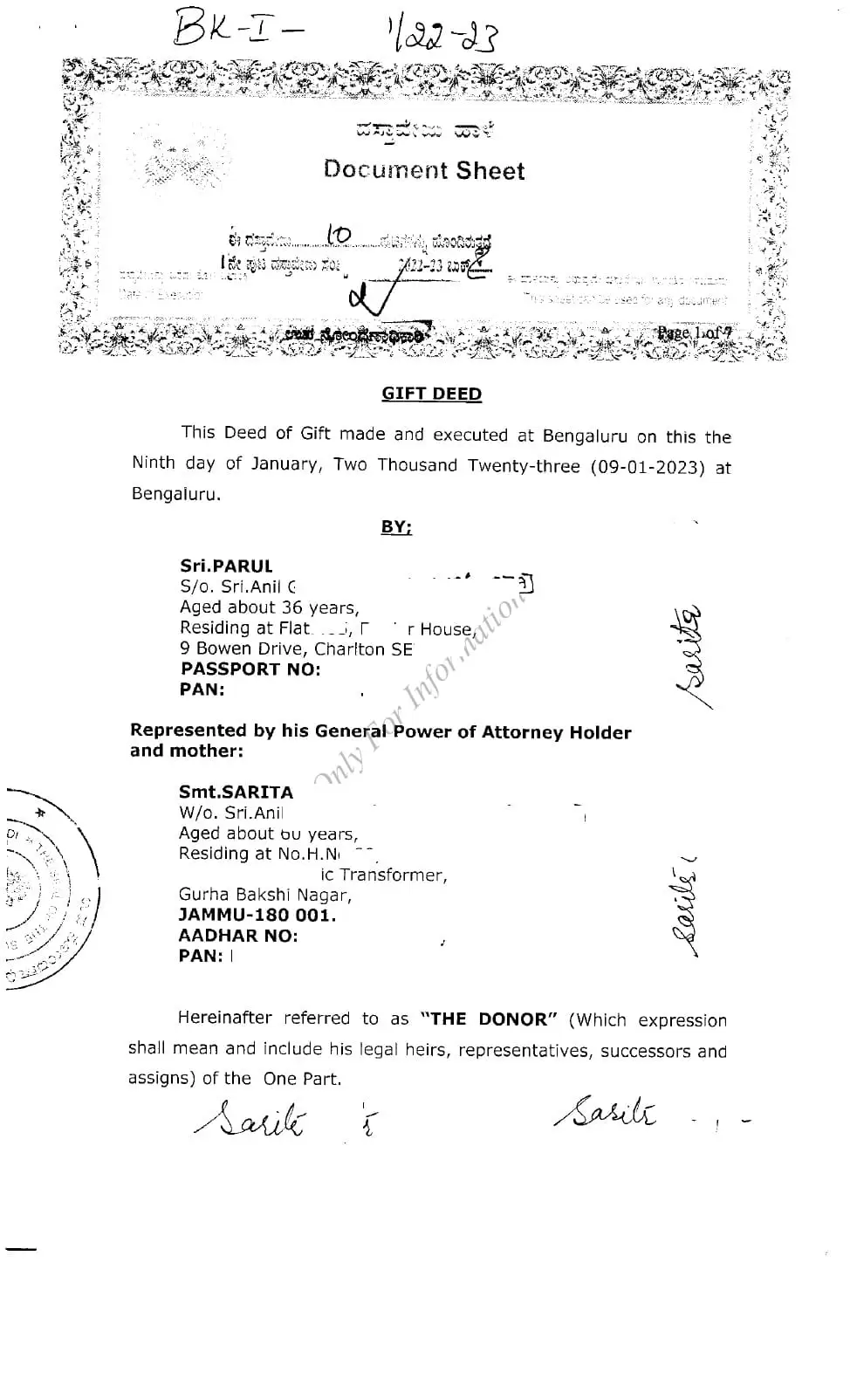
Mr. Parul, a resident of London, owns a 2BHK flat in Bangalore. He wished to gift this flat to his mother, Mrs. Sarita. However, due to COVID-19 travel restrictions, he was unable to visit India to execute the Gift Deed personally.
To proceed with the transfer, Mr. Parul executed a General Power of Attorney (GPA) in favor of his mother.
Below is an image of the executed GPA:
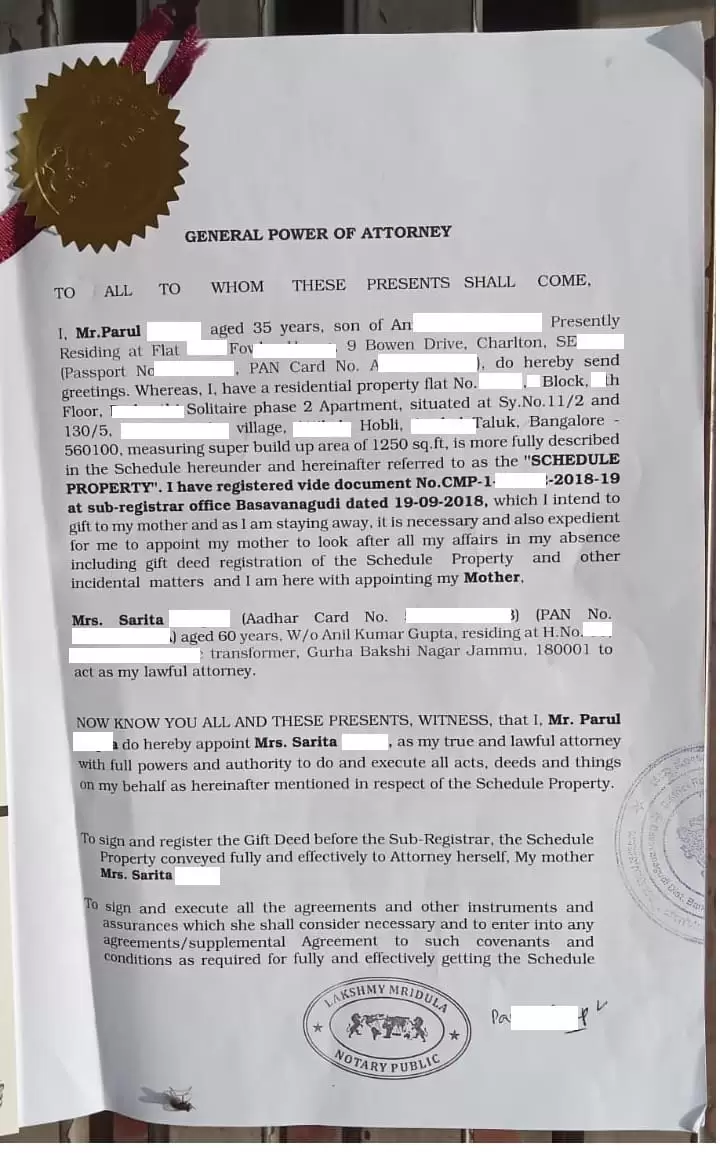
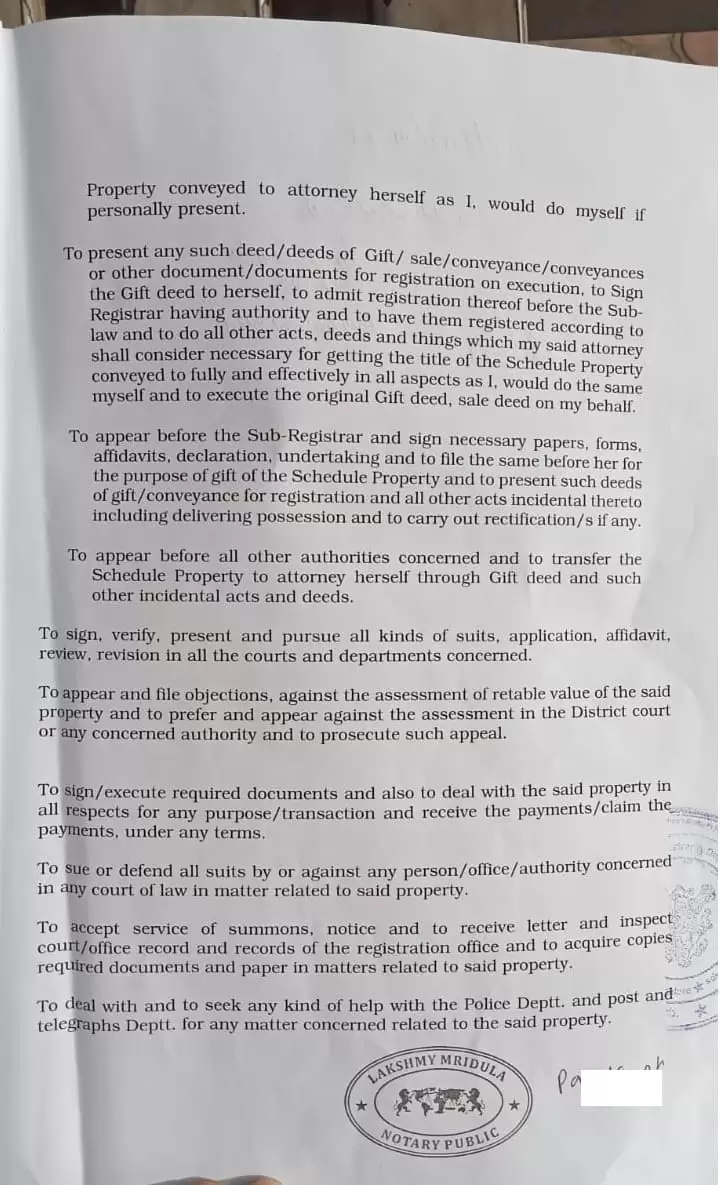
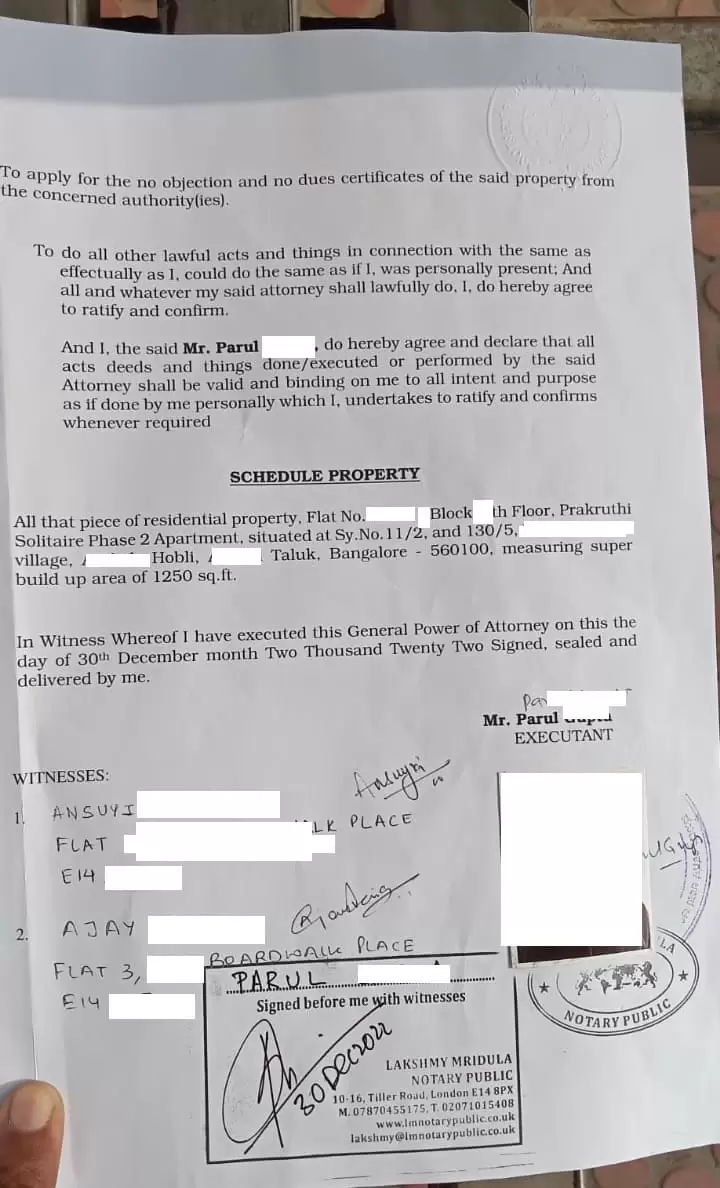
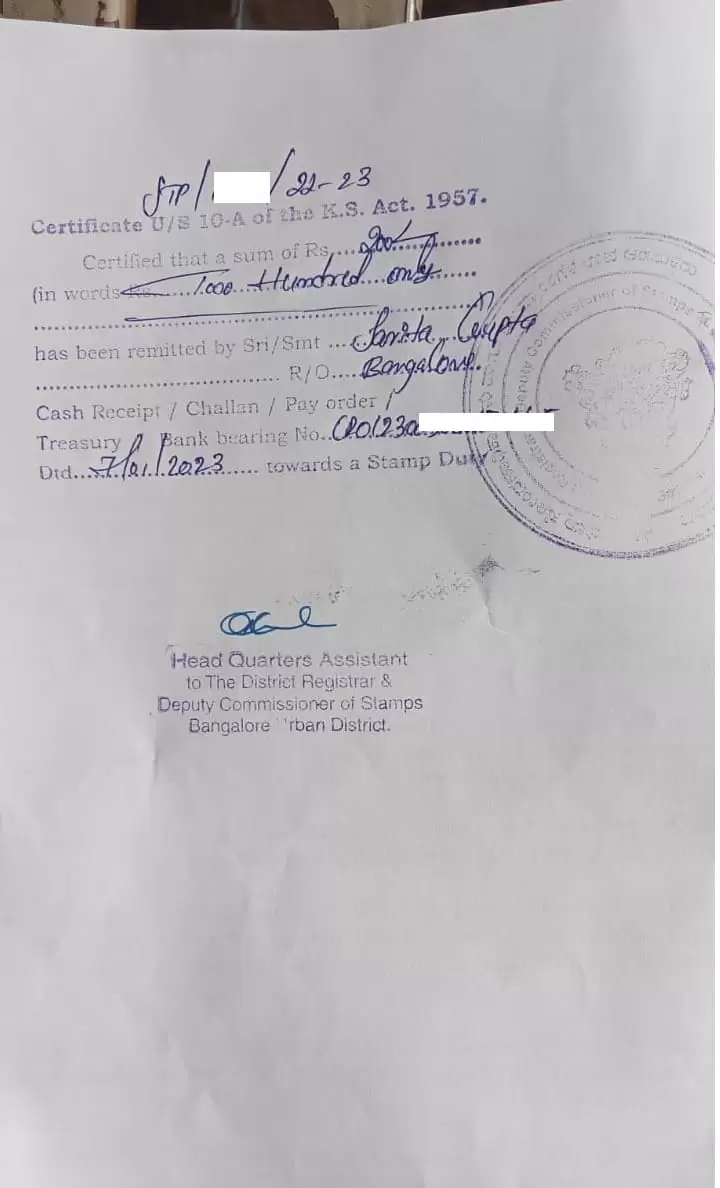
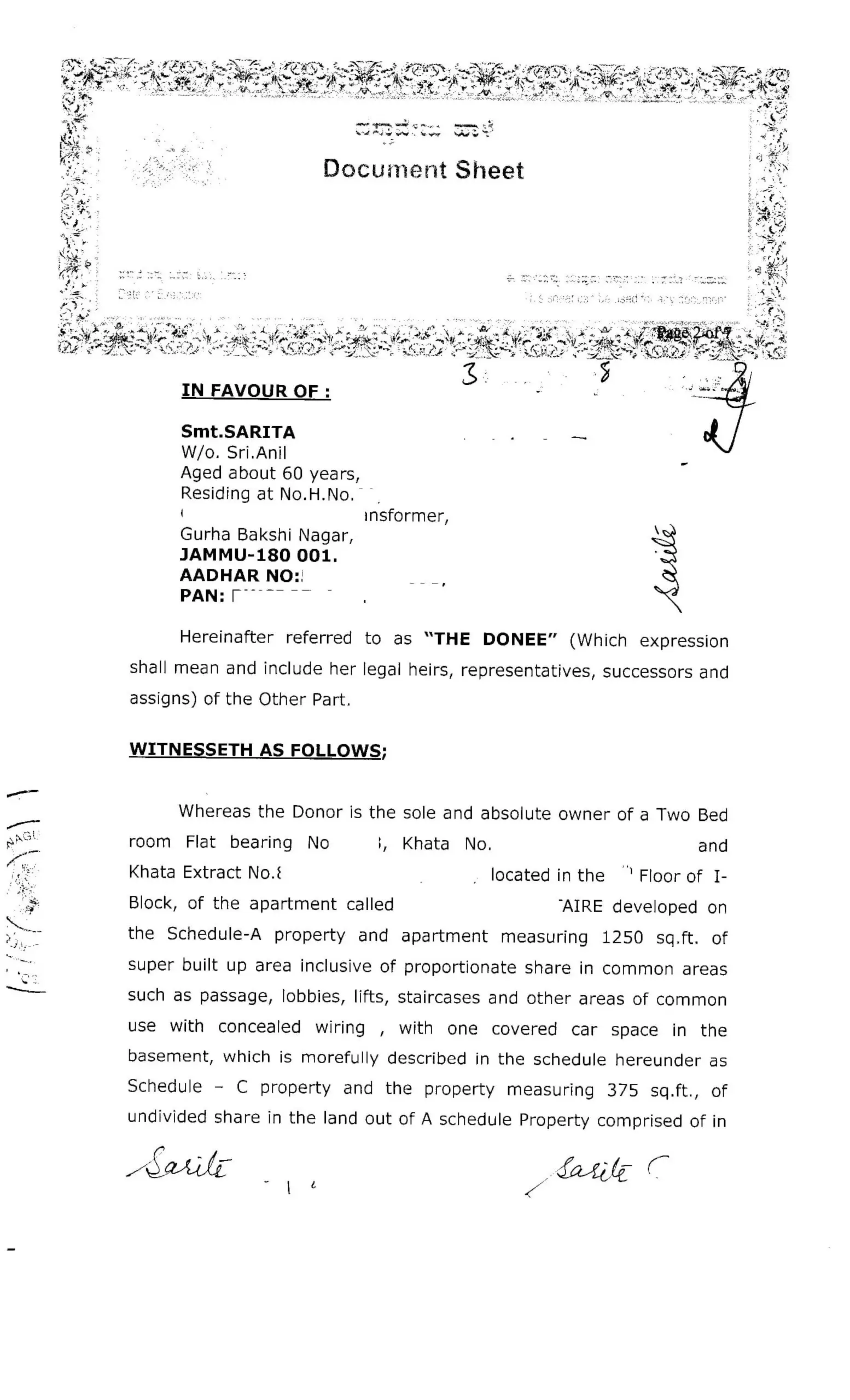
Using the authority granted in the GPA, Mrs. Sarita transferred the property to herself by registering a Gift Deed.
IN THE GIFT DEED
- Donor: Mr. Parul (represented by his POA holder, Mrs. Sarita)
- Donee: Mrs. Sarita (also signing in her own individual capacity)
Thus, Mrs. Sarita signed the deed on behalf of the donor and as the donee herself, which is legally permissible as long as the GPA explicitly allowed this transfer.
Below is an image of the executed Gift Deed
NEED ASSISTANCE?
We offer end-to-end support for:
- Drafting General Power of Attorney
- Property transfer through Sale or Gift Deeds
- Registration services
To avail our services, contact us at:
Email: pgnproperties@gmail.com
WhatsApp: +91–9742479020