
A Release Deed and a Gift Deed are two different documents used for transferring ownership in property. Although both may be executed without consideration, they are used in different situations.
WATCH OUR VIDEO GUIDE
Let us understand when a Release Deed and a Gift Deed are applicable, with real examples from family property transactions in Karnataka.
When Is a Release Deed Applicable?
A Release Deed is generally used when a co-owner of a property releases or transfers their share in favour of another person who is already a co-owner of the property.
A Release Deed is commonly registered without consideration, depending on the nature and terms of the transaction.
Real Example of a Release Deed in Karnataka
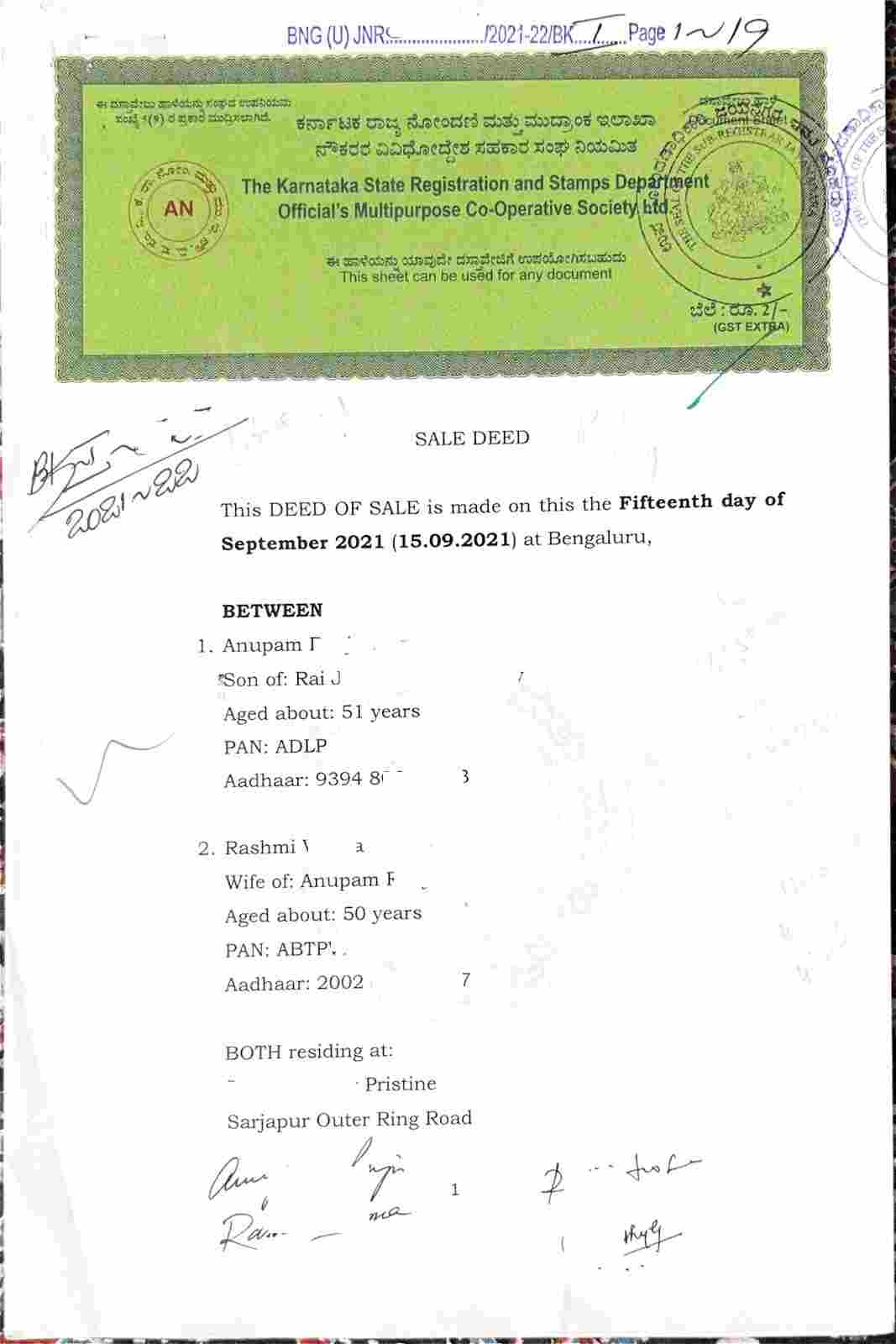
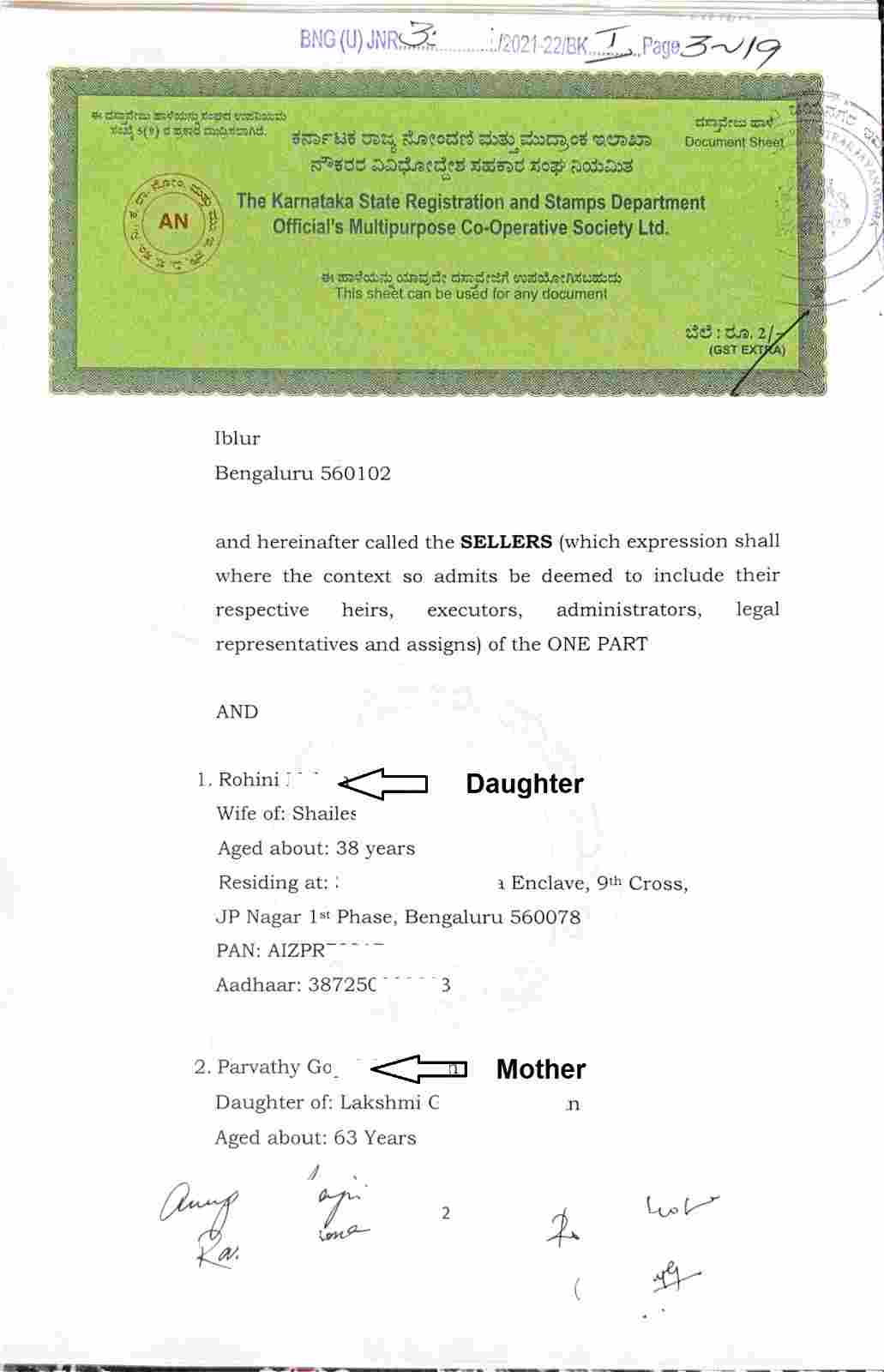
In our case, a mother and daughter jointly purchased a property in September 2021.
Below is the first page of the registered Sale Deed:
The second page of the Sale Deed shows that the property was jointly purchased by the mother and daughter:
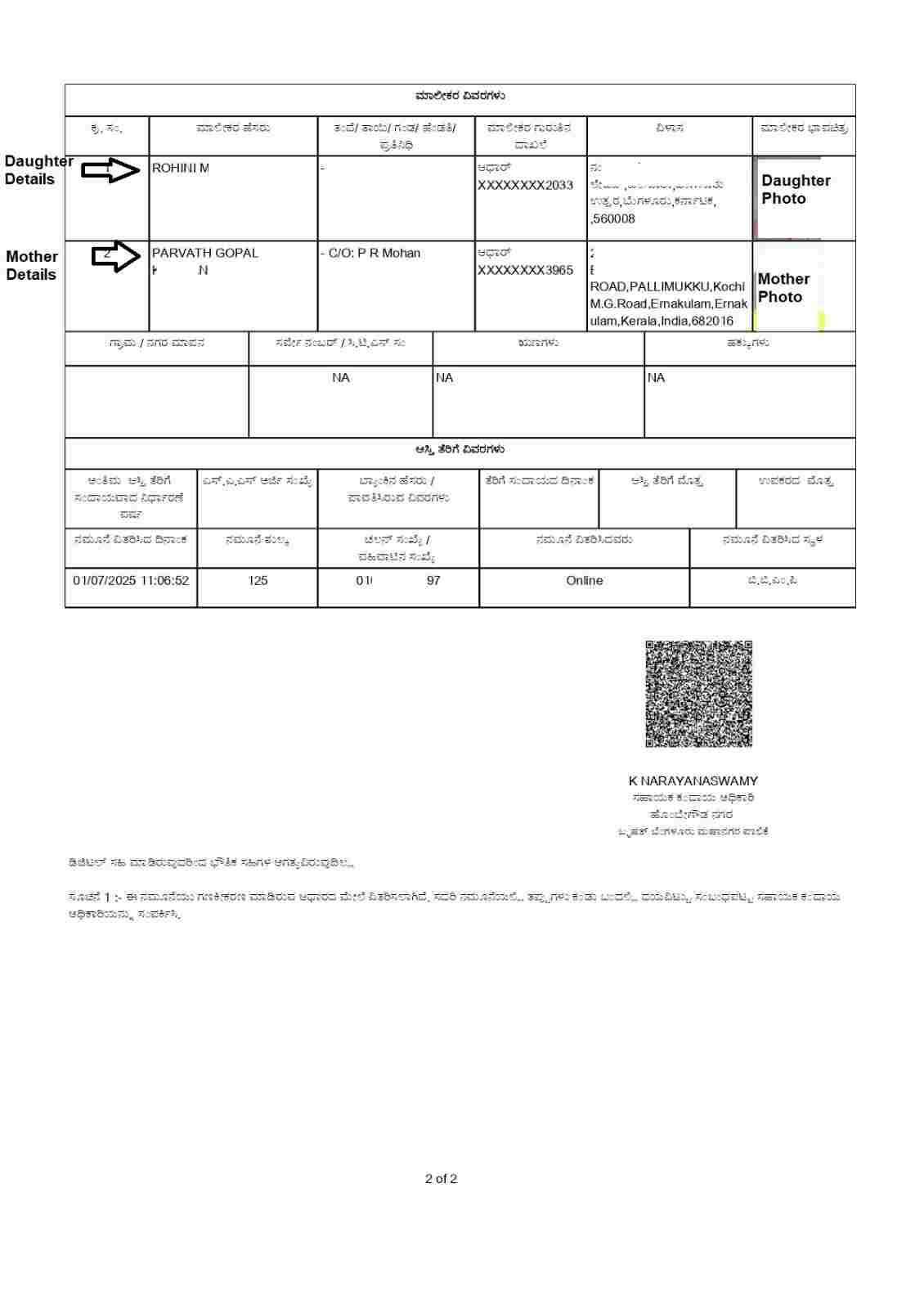
Since the mother and daughter were joint owners, the eKhata was also recorded in their joint names:
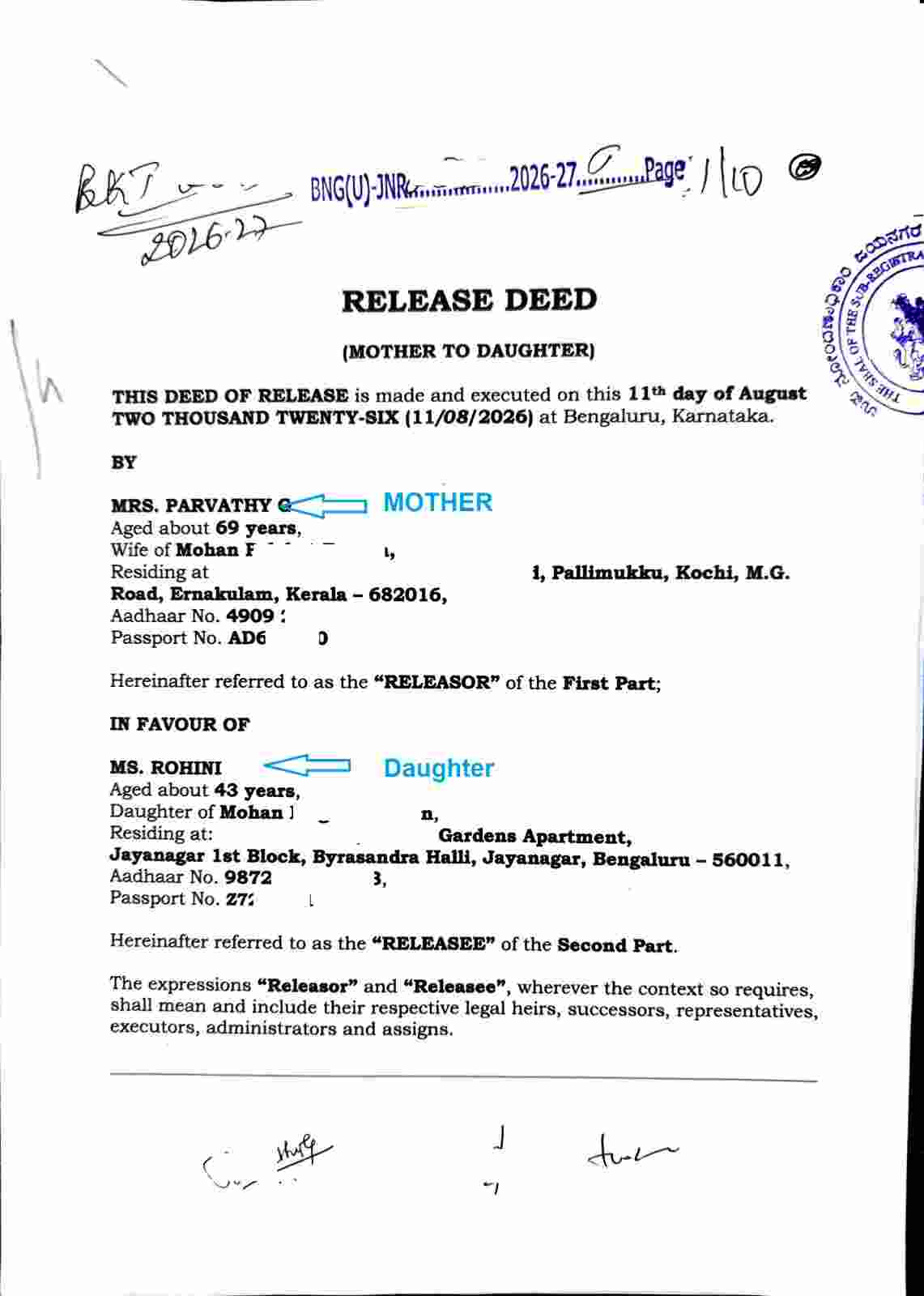
The mother wanted to release her share in the property in favour of her daughter.
Since the daughter was already a co-owner of the property, we proceeded with the Release Deed.
Below is the registered Release Deed:
After registration of the Release Deed, the property records were updated and the eKhata reflected the daughter as the sole owner:
Result
The mother released her share in the property, and the daughter became the sole owner of the property.
This is a typical example of where a Release Deed can be used between existing co-owners.
When Is a Gift Deed Applicable?
A Gift Deed is used when an owner voluntarily transfers property to another person without consideration.
Unlike a Release Deed, the recipient of a Gift Deed does not have to be an existing co-owner of the property.
For example, if a brother is the sole owner of a property and wants to transfer the property to his sister without receiving any consideration, a Gift Deed can be used.
Real Example of a Gift Deed in Karnataka
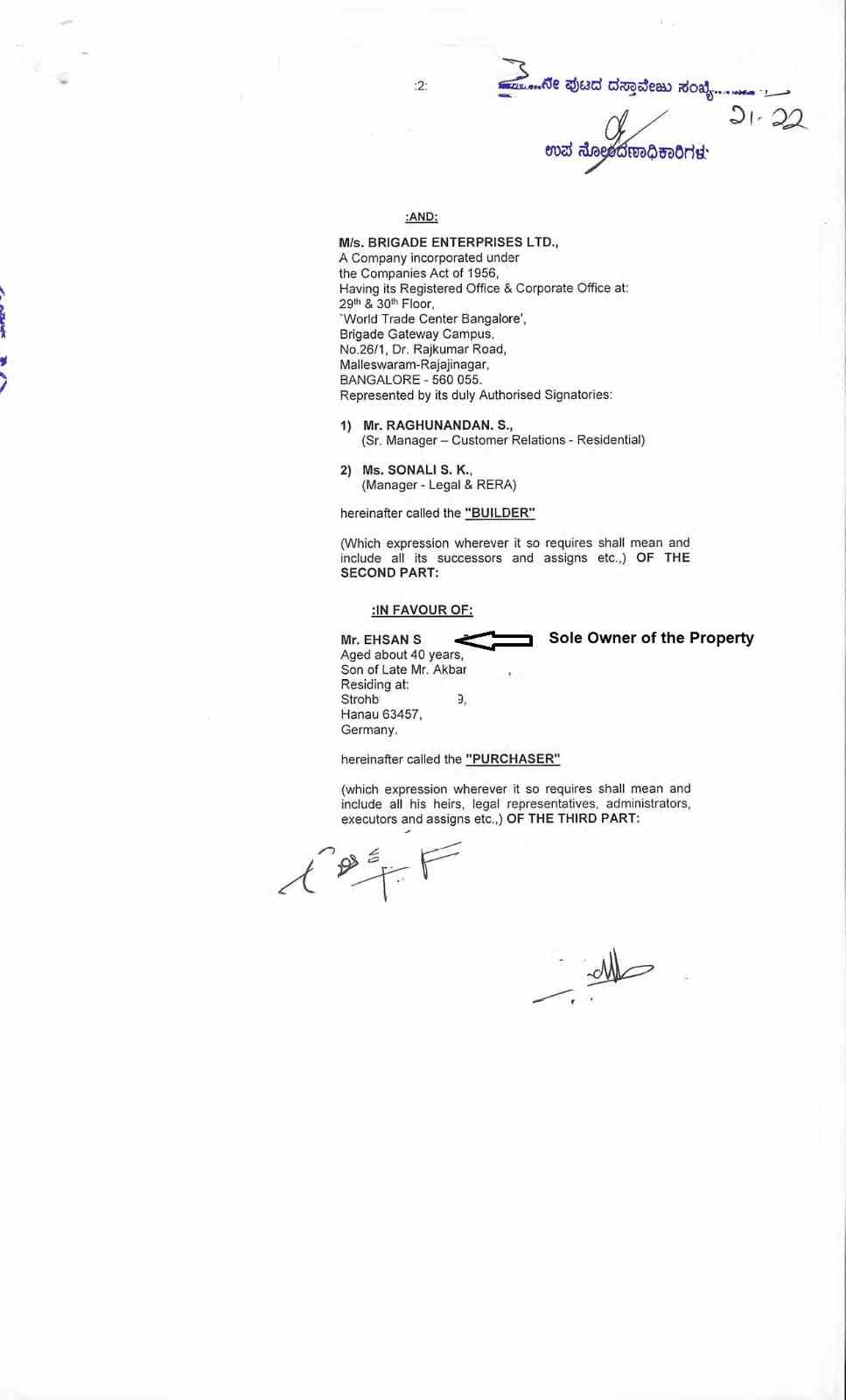
In our example, the brother was the sole owner of the property.
Below is the registered Sale Deed:
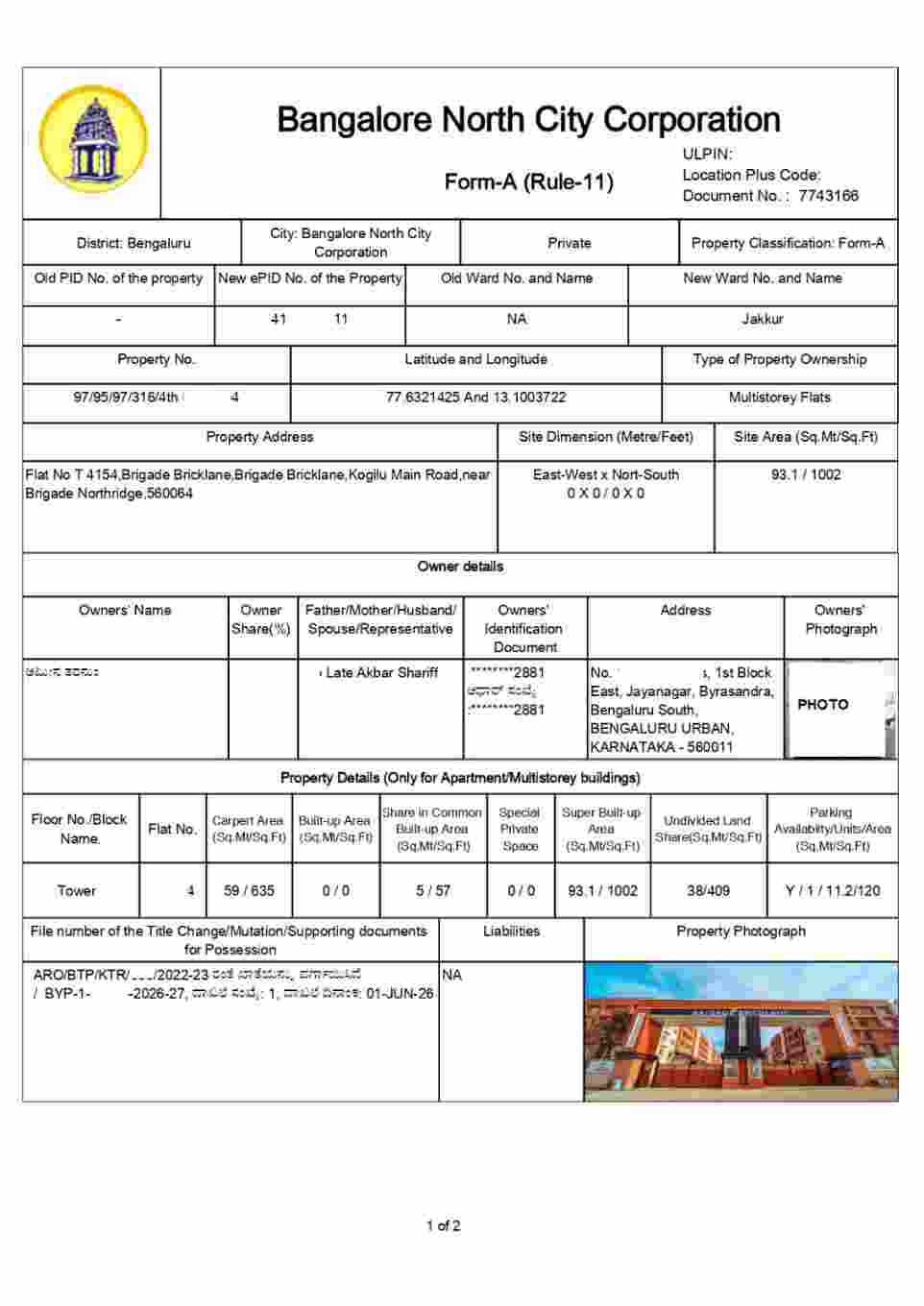
Since the brother was the sole owner, only his name was reflected in the eKhata:
The brother wanted to transfer the property to his sister without receiving any consideration.
Since the sister was not an existing co-owner of the property, we proceeded with a Gift Deed.
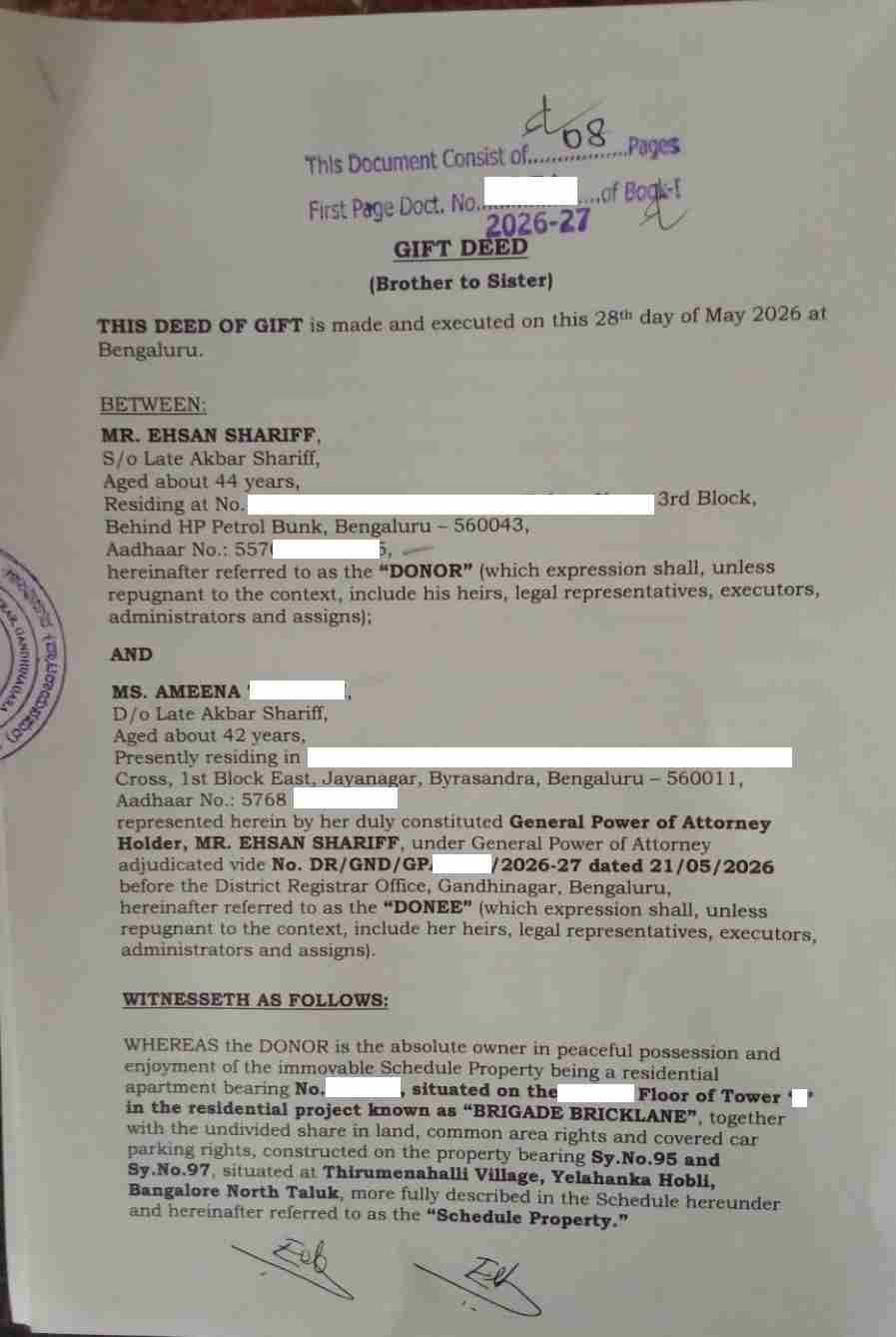
Below is the first page of the registered Gift Deed:
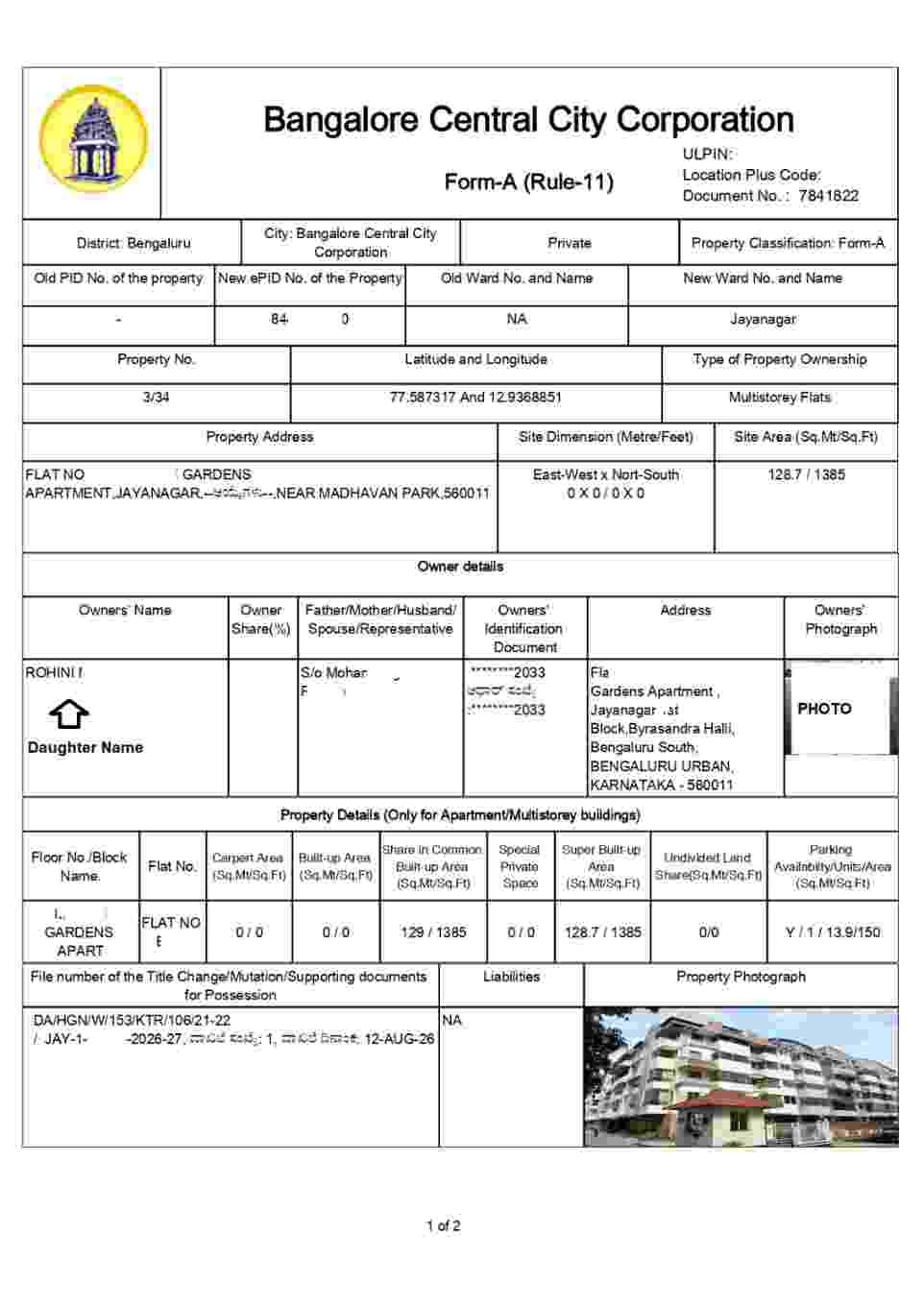
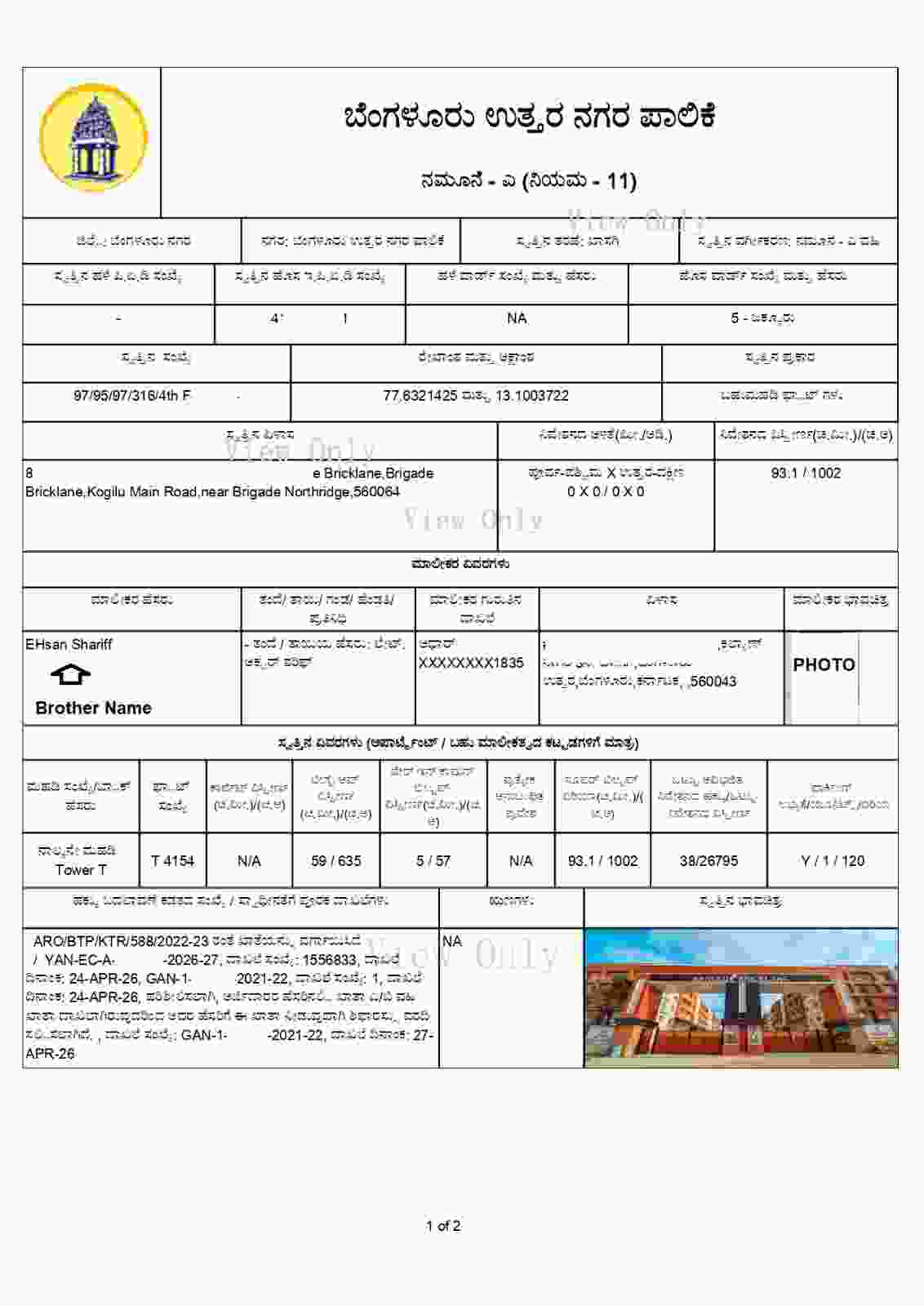
After the Gift Deed was registered, the eKhata was transferred from the brother’s name to the sister’s name. The sister’s details are highlighted in the eKhata shown below.
Result
The brother voluntarily gifted the property to his sister without any consideration. After registration of the Gift Deed, the eKhata and property tax records were updated in the sister’s name, making her the owner of the property.
Release Deed vs Gift Deed: What Is the Difference?
| Particular | Release Deed | Gift Deed |
| Simple meaning | Co-owner gives up their share | Owner gives property to another person |
| Who receives it? | Usually another co-owner | Recipient need not be a co-owner |
| Money involved? | Usually no money | No money |
| Simple example | Mother gives up her share to co-owner daughter | Brother gives his property to sister |
Cost of Registering Release Deed and Gift Deed in Karnataka
The applicable government charges depend on the nature of the transaction and relationship between the parties
In the family transactions discussed in this article, the government charges were:
- Stamp Duty: ₹5,000
- Registration Fee: ₹1,000
- Cess: ₹500
- Scanning Fee: ₹50 per page
Process of Registration
The general process for registering a Release Deed or Gift Deed in Karnataka is:
- Drafting the Deed
- Submission of the registration application
- Payment of applicable stamp duty and registration charges
- Slot booking
- Registration at the Sub-Registrar Office
- Updating the applicable property records/eKhata
How Long Does Registration Take?
The registration process may take approximately 7-15 working days in a straightforward case, including:
- Drafting
- Application submission
- Document review/approval, where applicable
- Stamp duty payment
- Slot booking
- Registration
- ekhata auto-mutation
Conclusion
The main difference between a Release Deed and a Gift Deed is who is transferring the property and whether the person receiving it already has a share in the property.
Therefore, before deciding whether to execute a Release Deed or Gift Deed, it is important to examine the existing Sale Deed, ownership structure, eKhata/property records and relationship between the parties.
Need assistance with Release Deed and Gift Deed
PGN Property
Email ID pgnproperties@gmail.com
Contact No, +91-9742479020