
To verify ownership, follow these steps:
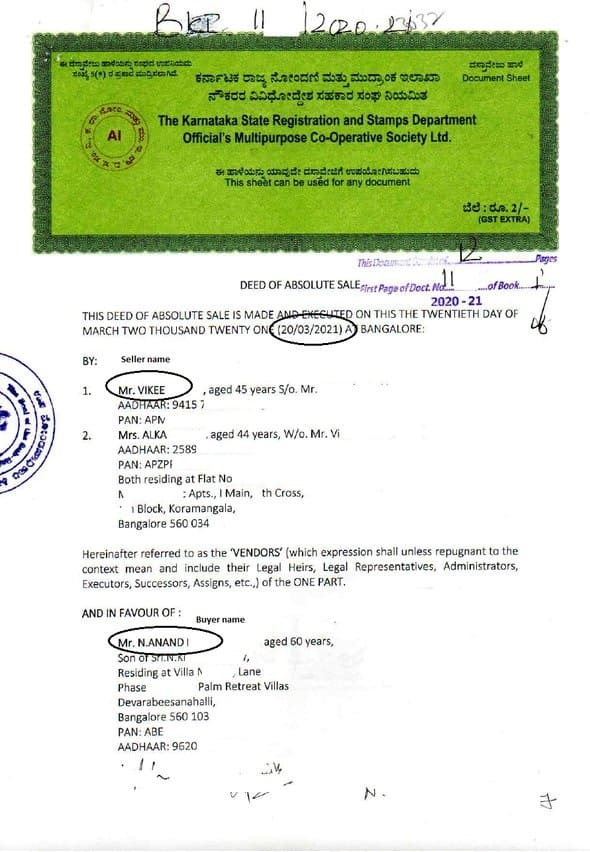
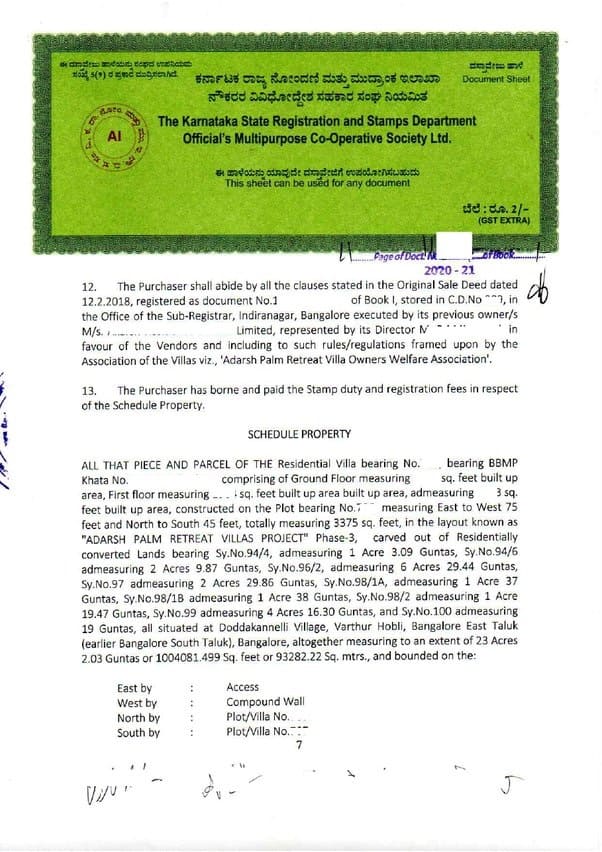
- Review the Registered Sale Deed The registered sale deed contains essential details such as the date of registration, seller's name, buyer's name, and the property schedule. Below is an example:
- Date of Registration – This indicates when the property was legally transferred.
- Seller’s Name – Confirms the original owner who sold the property.
- Buyer’s Name – Ensures the rightful ownership of the current owner.
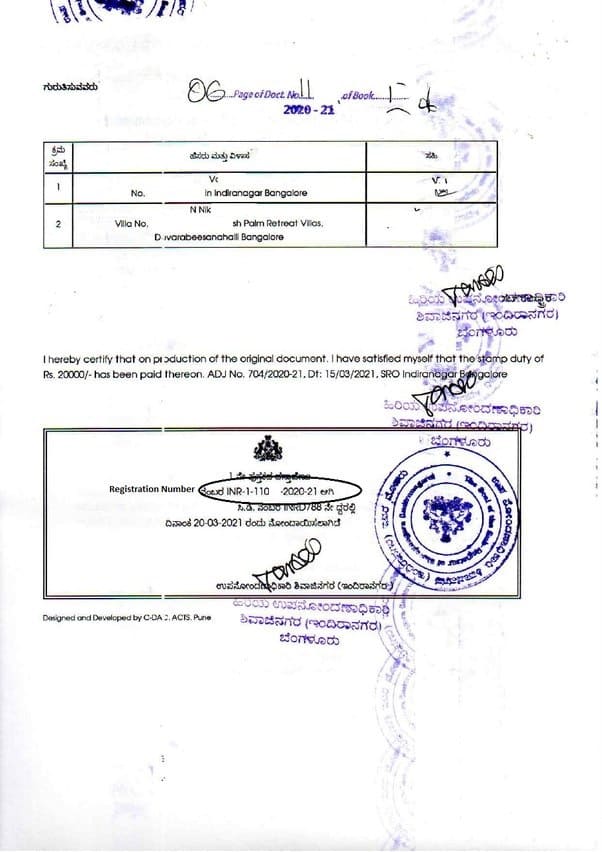
- Registration Number – A unique identifier for the sale transaction.
In the below image, we encircled the date of registration, seller name and buyer name
Below is another page of sale deed with registration number encircled
Below is the property schedule in sale deed
 2. Cross-check Details in the Encumbrance Certificate (EC)
Once the sale deed is verified, extract an Encumbrance Certificate from the Sub-Registrar Office (SRO) or online via the Kaveri Online Services portal.
Key details in the EC:
2. Cross-check Details in the Encumbrance Certificate (EC)
Once the sale deed is verified, extract an Encumbrance Certificate from the Sub-Registrar Office (SRO) or online via the Kaveri Online Services portal.
Key details in the EC:
- Column 3: Date of Registration – This should match the date in the sale deed. For example, if the sale deed is registered on March 20, 2021, the same date should reflect in the EC.
- Column 5: Seller’s Name – The name of the previous owner, e.g., VIKEE, should appear exactly as in the sale deed.
- Column 6: Buyer’s Name – The new owner’s name, e.g., ANAND, must match the sale deed.
- Column 9: Registration Number – The unique five-digit registration number should be identical in both documents.

How to Apply for an Encumbrance Certificate in Karnataka? You can apply for an Encumbrance Certificate (EC) Online in Kaveri Online Services portal Need Assistance? We provide professional assistance in extracting the Encumbrance Certificate (EC). To avail of our service, contact us: Email: pgnproperties@gmail.com WhatsApp: +91-9742479020 Thank you for reading!