
Many homeowners often ask “I have closed my home loan and sold the property; however, I was not aware that the Discharge Deed must be registered at the Sub-Registrar’s Office. Am I still permitted to register the Discharge Deed after the property has been sold?”
The answer is yes, but with some important nuances. Let me share a real-life example from one of my clients to help you understand the process:
CASE STUDY: MR. SUSHIL’S EXPERIENCE
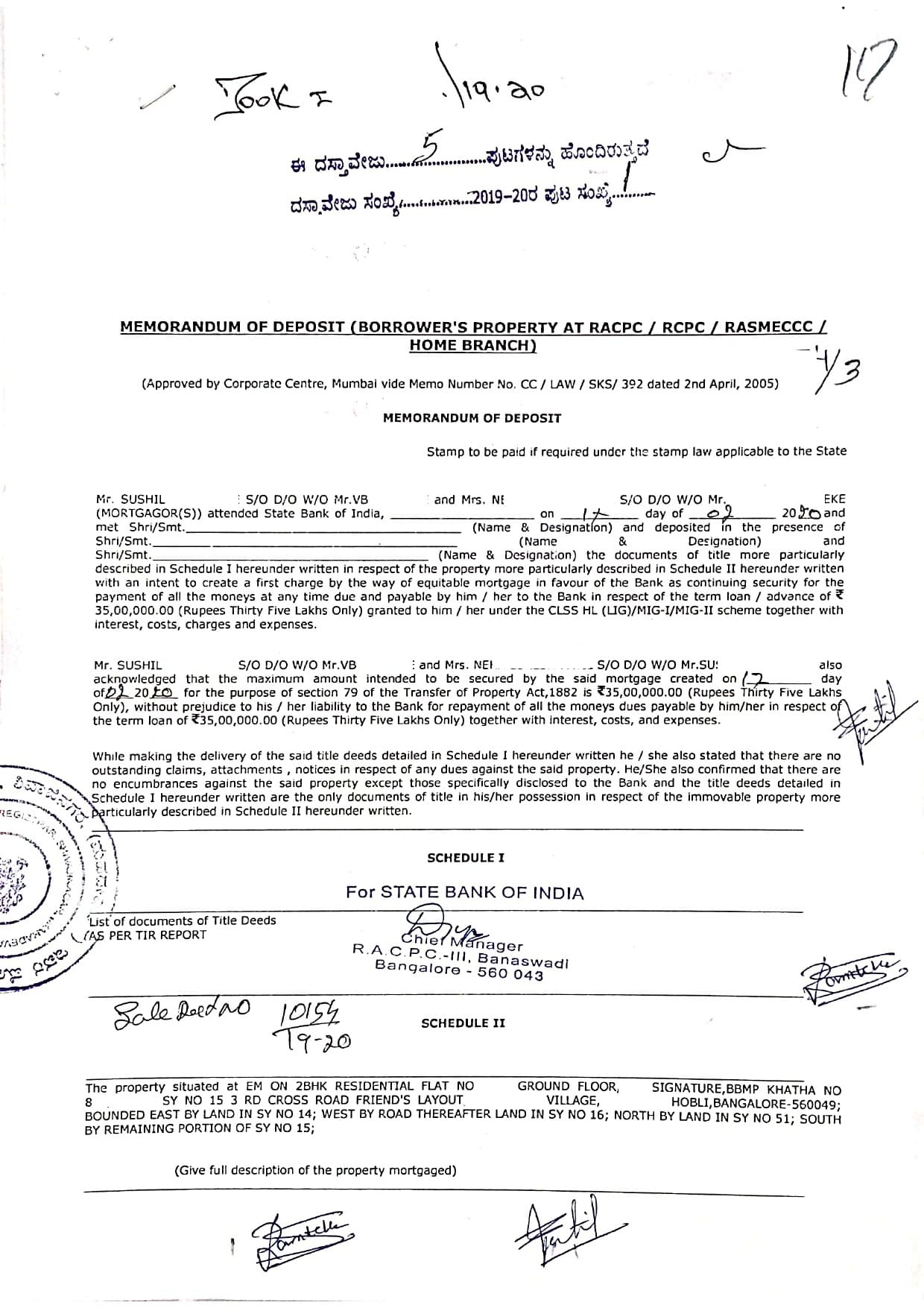
In February 2020, my client, Mr. Sushil, availed a home loan of Rs.35 lakhs from State Bank of India (SBI) for purchasing a 2BHK apartment. The loan was secured through a registered Memorandum of Deposit of Title Deeds (MODT). Refer to the below MODT
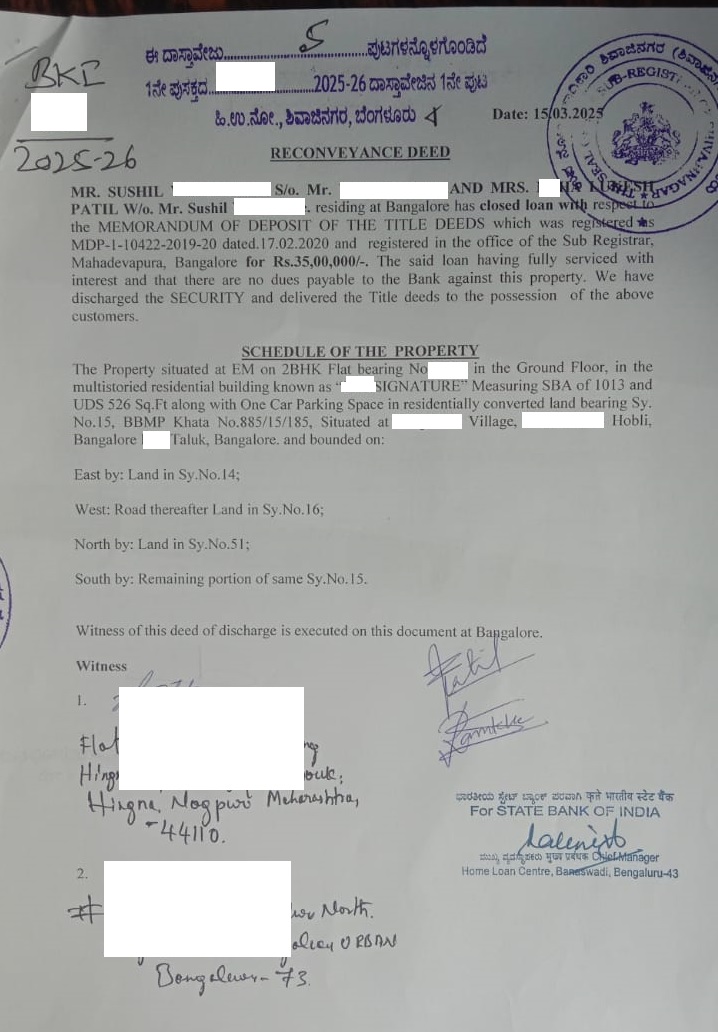
On 15th March 2025, Mr. Sushil fully repaid his loan and collected the Reconveyance Deed (also referred to as the Discharge Deed) from SBI. The relevant date is highlighted in the document below:
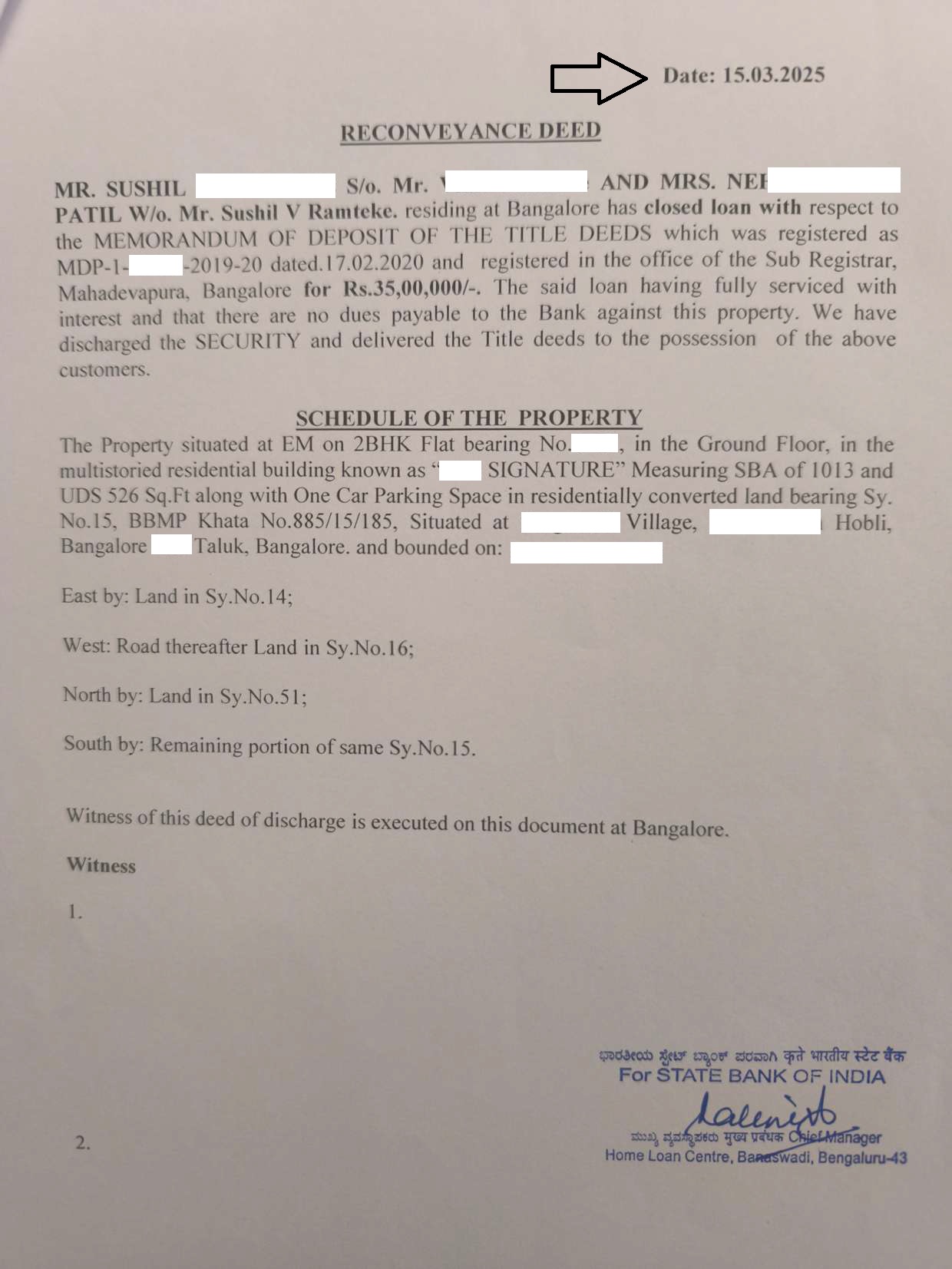
At that point, Mr. Sushil was unaware that this Reconveyance/Discharge Deed needed to be registered at the local Sub-Registrar’s Office in order to remove the mortgage lien that was previously recorded.
Subsequently, Mr. Sushil sold his property on 9th May 2025. The Sale Deed clearly identifies him as the seller:
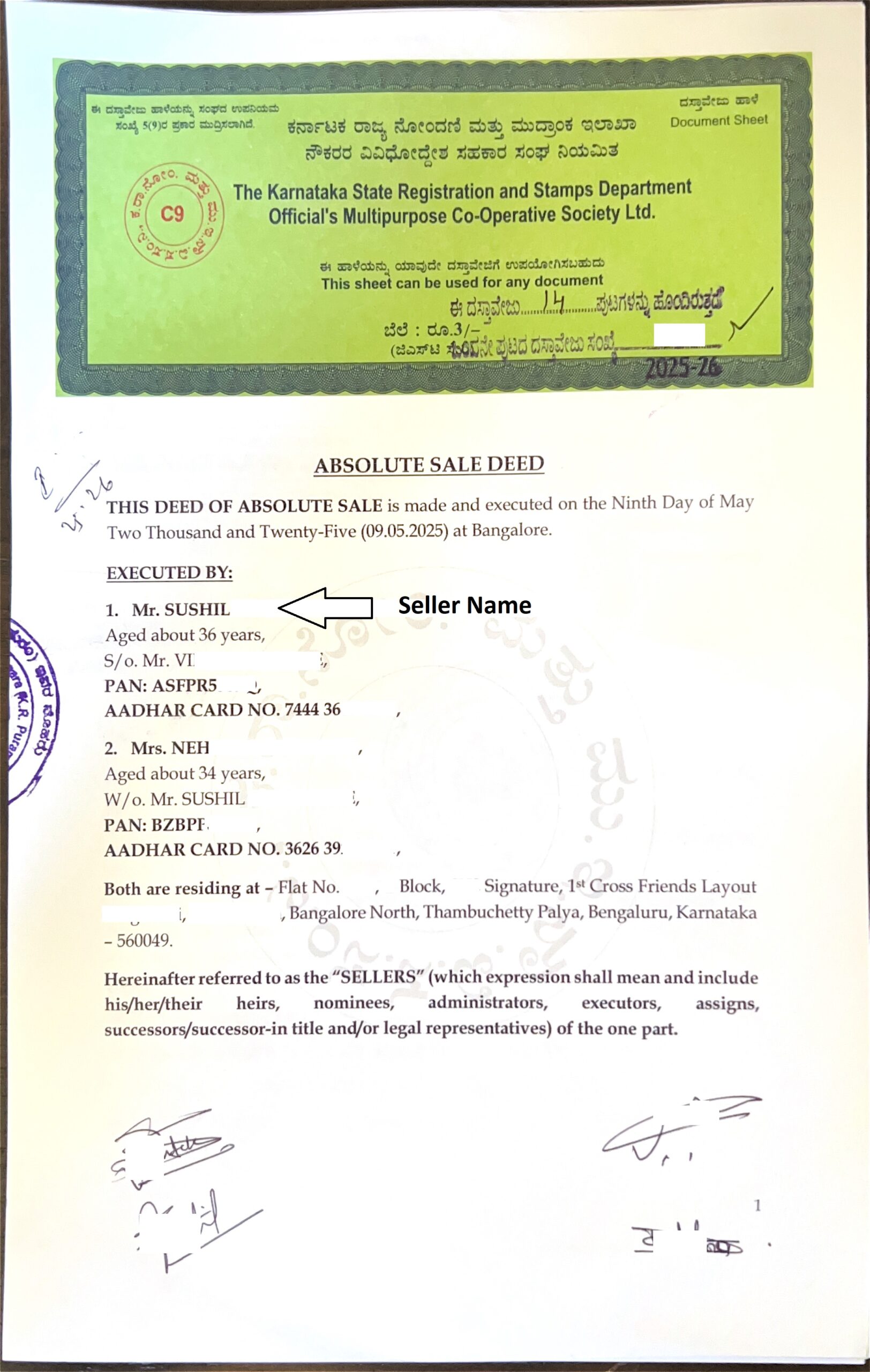
After the property transaction, the buyer downloaded the latest Encumbrance Certificate (EC) and noticed that the mortgage lien had not been removed. The buyer promptly contacted Mr. Sushil to address this oversight, as the EC still reflected the earlier MODT lien.
At that point, since the property had just been sold, the Khata Mutation process was still pending. As a result, Mr. Sushil was unable to immediately file the application to register the Reconveyance Deed. Refer to the screenshot of the pending mutation status
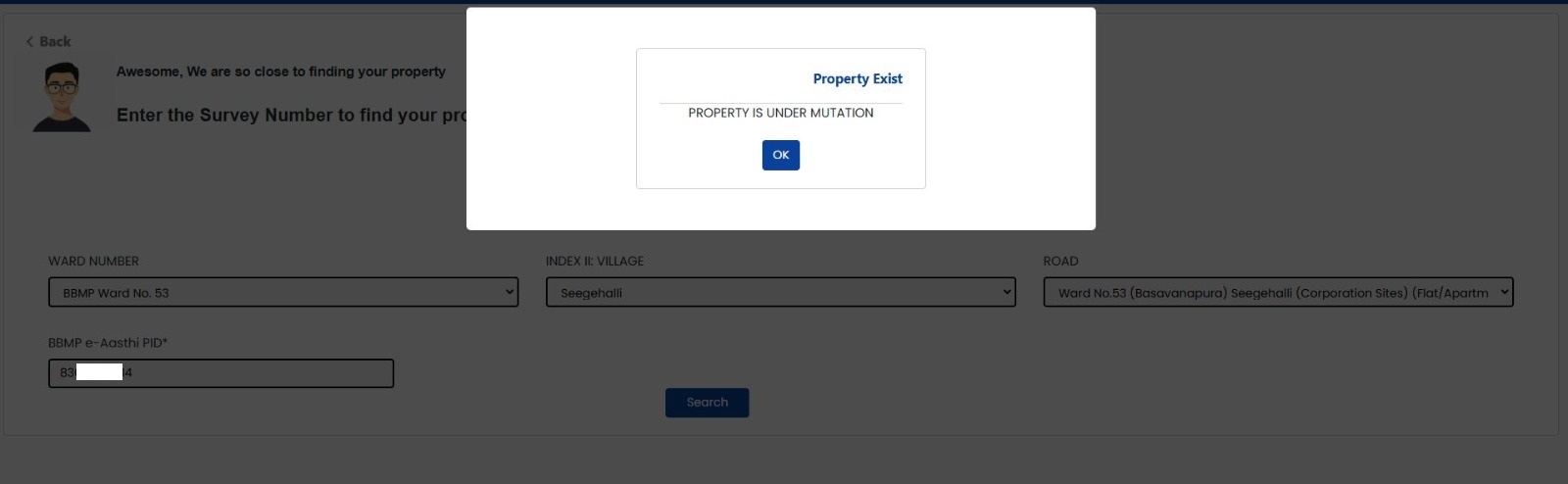
We advised the buyer to proceed with payment of the mutation fee to expedite the process. Once the mutation was completed, we submitted the application to register the Reconveyance Deed on 5th June 2025, after the property had already been sold. Refer to the below application with highlighted submission date
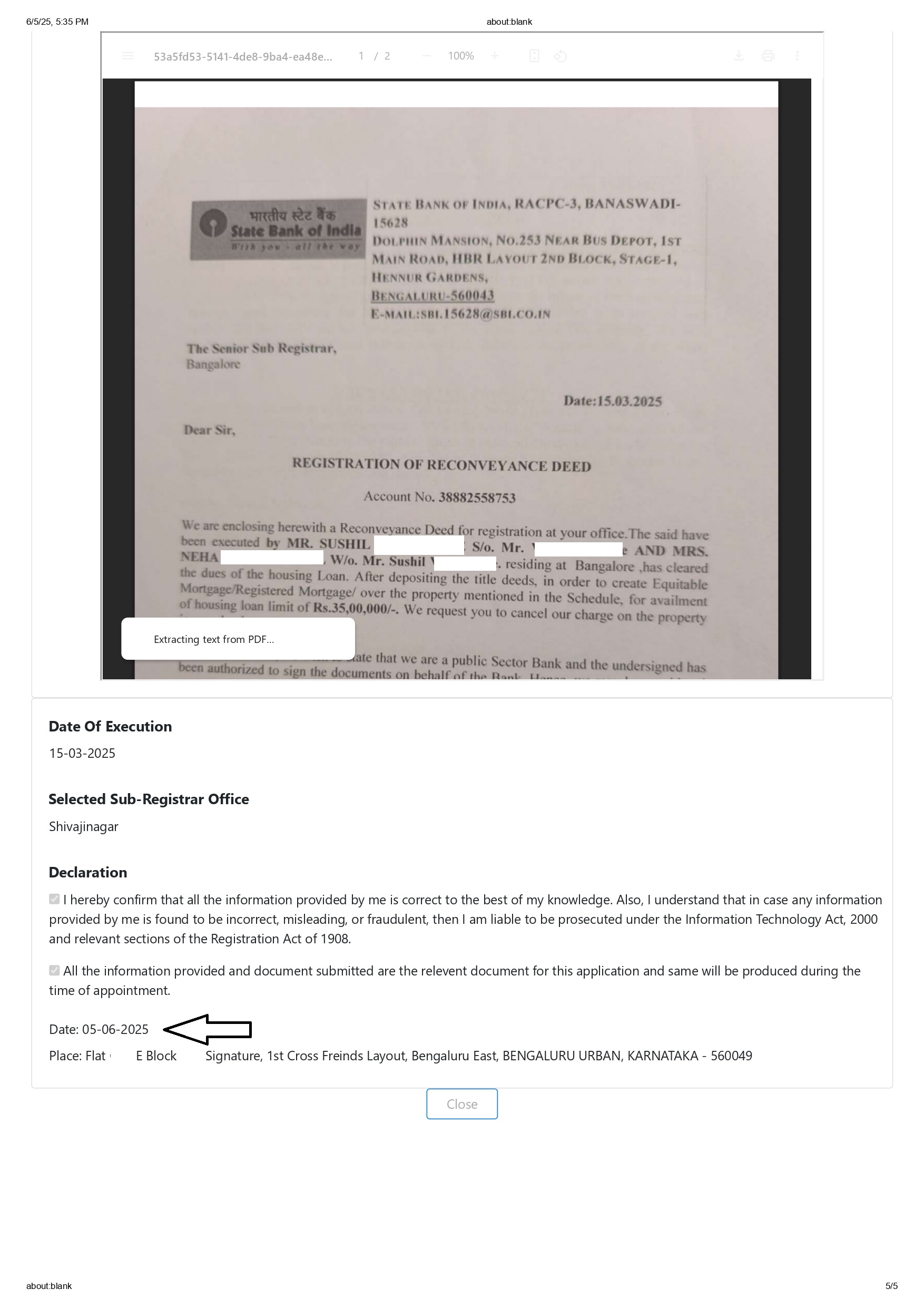
Finally, the Registered Reconveyance Deed was issued, thus clearing the earlier mortgage lien from the property records. Refer to the registered Reconveyance Deed image
KEY TAKEAWAYS:
- The correct procedure would have been for Mr. Sushil to register the Reconveyance/Discharge Deed before selling the property.
- The buyer should have downloaded and checked the latest Encumbrance Certificate (EC) prior to purchase to verify the removal of any loan liens.
- In this case, although the buyer had sighted the Discharge Deed, neither party was fully aware that registration of the Deed was required to update the official property records.
- Both parties proceeded with the Sale Deed registration. It was only when the buyer downloaded the latest EC post-sale that they discovered the mortgage lien still reflected in the EC.
- The lien was subsequently cleared by registering the Reconveyance Deed after the sale. However, this complication could have been avoided if the seller had registered the Discharge Deed prior to executing the Sale Deed.
- We would also like to highlight the importance of obtaining and verifying the Encumbrance Certificate (EC) prior to executing the Sale Deed.