
Buying a resale flat from multiple sellers (co-owners or joint owners) requires clear documentation and a well-planned payment process. Using a real transaction as the example, this guide explains the process step by step, from title verification to e-Khata transfer.
WATCH OUR VIDEO GUIDE:
Our Transaction at a Glance
- Property: 3 BHK flat
- Sale type: Resale
- Purchase price: ₹1.66 crore
- Duration: 16 July to 18 November 2026
- Number of sellers: Two (mother and son, joint owners with a 50% share each)
- Home loan: Yes
The 10-Step Process We Followed
- Documentation and title verification
- Loan feasibility check (if you need a home loan)
- Sale agreement and down payment
- Home loan application and sanction (if you need a home loan)
- Seller authorisation (GPA) and TDS payment
- Sale deed application on Kaveri Online Services, stamp duty and slot booking
- Sale deed registration
- MODT registration (only if your bank requires it)
- Final payment and loan disbursement
- e-Khata transfer (auto-mutation)
Step 1: Documentation and Title Verification
Documentation matters even more when there are multiple sellers. Collect these primary documents from the sellers for verification:
- Registered deed: explains how the sellers acquired the property
- Parent deed: traces the chain of ownership
- e-Khata
- Sellers' Aadhaar
- Loan closure letter: if the sellers bought the property with a home loan
- Cancelled cheque or a copy of the passbook: for bank account reference
How to verify the documents:
- Check the deed and Encumbrance Certificate (EC). Extract the certified copy of the deed and the EC from Kaveri Online Services. Check that the ownership details and the property description match the documents provided by the sellers. An EC records registered transactions, such as mortgages, against the property.
- Trace the chain of ownership. Use the parent deed to trace the ownership back to its origin. The chain must be unbroken.
- Cross-check the e-Khata. Extract the e-Khata from the website of the respective local authority and check that it matches the e-Khata provided by the sellers, including the property description (flat number, measurement and location).
Step 2: Loan Feasibility Check (If You Need a Home Loan)
Once you are satisfied with the documents and the cross-verification of ownership and property description, hand them to the bank to check loan feasibility. The bank's legal team verifies the documents and confirms whether a loan can be sanctioned.
Step 3: Sale Agreement and Down Payment
Start the sale agreement once the bank confirms loan feasibility.
Three Ways to Execute a Sale Agreement
- Registered sale agreement
- Sale agreement on e-stamp paper through Kaveri Online Services
- Sale agreement on non-judicial stamp paper
What We Did
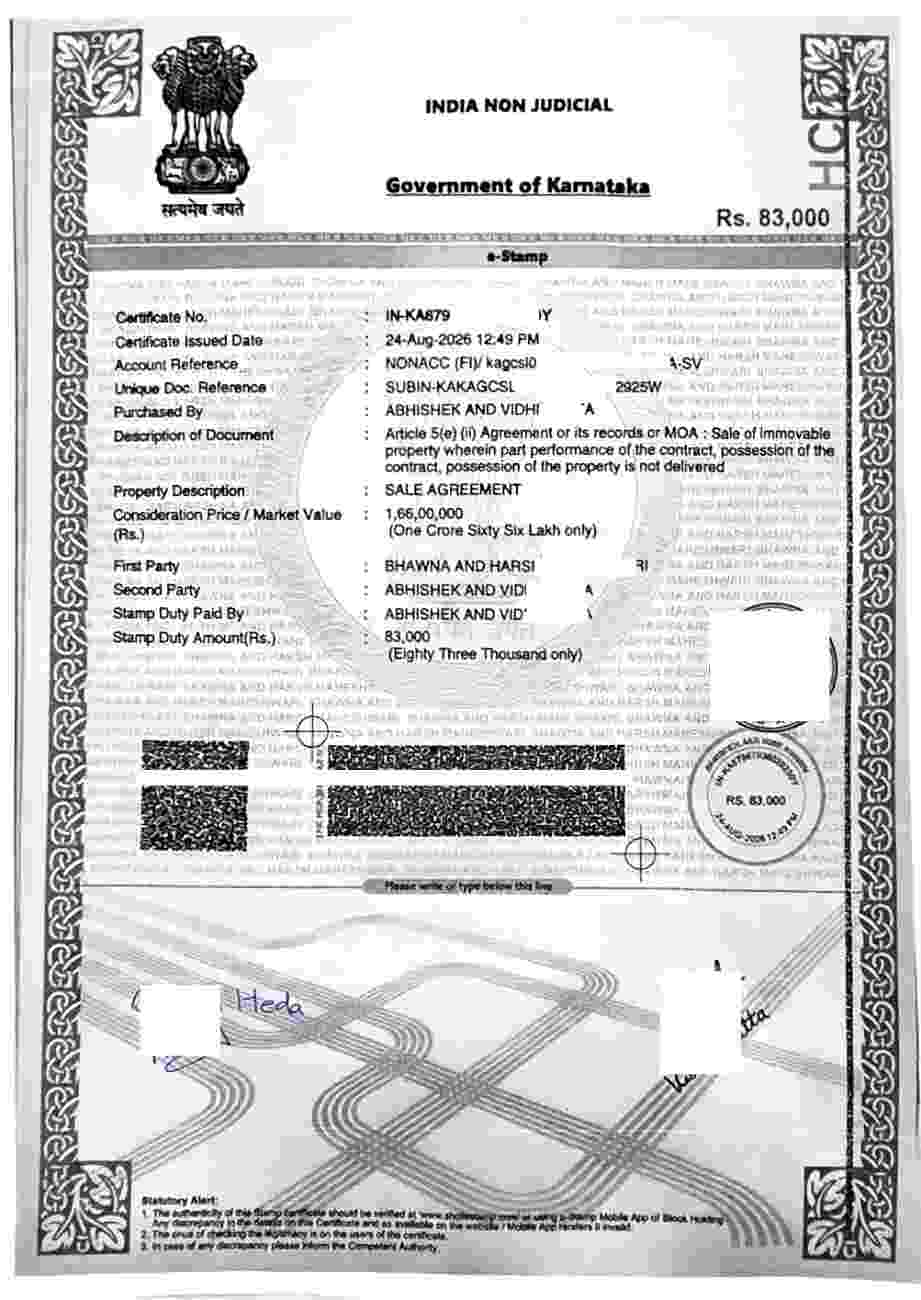
We executed our agreement on non-judicial stamp paper:
- Drafting. We drafted the sale agreement, and all parties (sellers, buyers and the advocate) confirmed the draft.
- Stamp paper. We bought the stamp paper from a co-operative bank near us:
- Stamp duty: 0.5% of the consideration, that is 0.5% × ₹1.66 crore = ₹83,000
- Stamp vendor processing fee: ₹2,000
- Printing and signing. We printed the draft on the stamp paper. The sellers, the buyers and two witnesses signed it.
- Down payment. At the time of signing, the buyers paid a down payment of ₹16 lakh to the sellers.
Step 4: Home Loan Application and Sanction (If You Need a Home Loan)
The home loan process needs coordination with the bank. It generally takes around 15 to 30 working days.
We submitted these documents to the bank:
- Application form
- Income proof (salary slips)
- Photocopies of the property documents
- Sellers' cancelled cheque
At this stage, we expected a home loan of ₹1.5 crore.
Step 5: Seller Authorisation (GPA) and TDS Payment
General Power of Attorney (GPA)
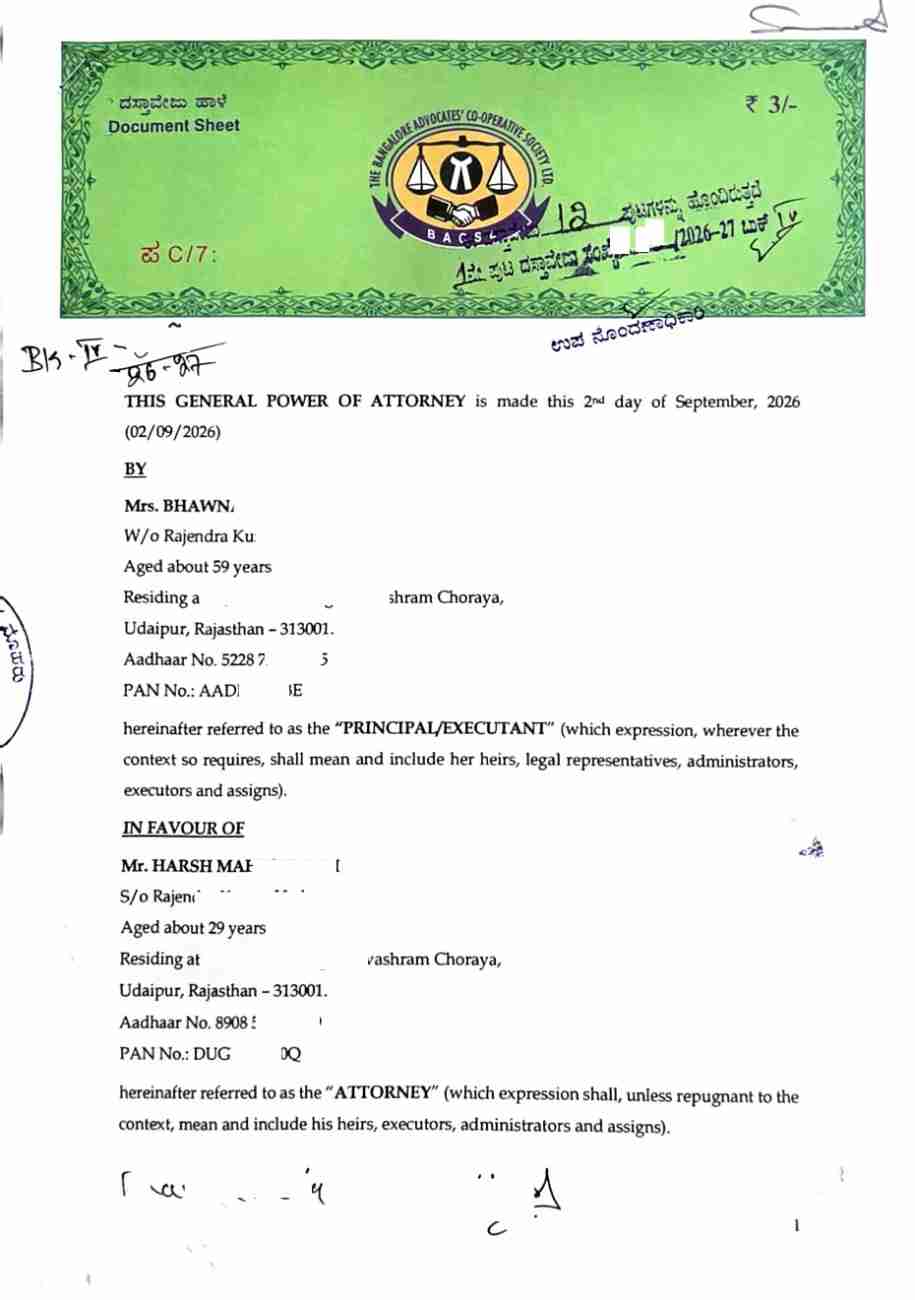
In our case, the son lives in Bangalore and the mother lives in Rajasthan. In September, the mother visited Bangalore for a short vacation. We used this chance to register a General Power of Attorney (GPA) from the mother to the son in Bangalore, because she might not be available in Bangalore on the day of the sale deed registration.
Life Certificate
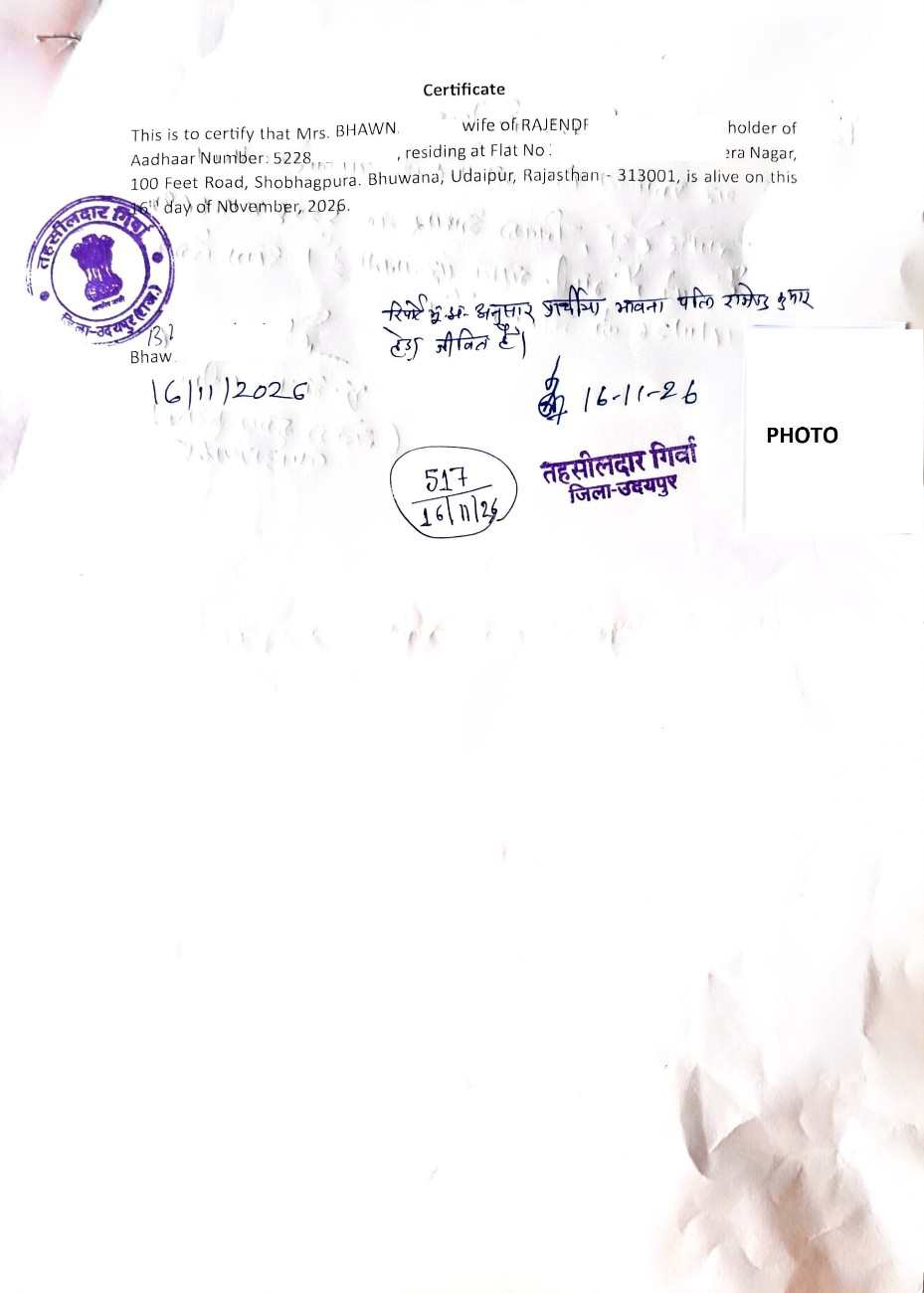
Just before the sale deed application, the mother obtained a life certificate from the Tehsildar in Rajasthan.
TDS on Property Purchase (1%)
Because the consideration was more than ₹50 lakh, 1% TDS applied:
1% × ₹1.66 crore = ₹1,66,000
Important points for multiple sellers:
- Split the TDS in line with the consideration. Each seller owned 50%, so the consideration and the TDS were split 50% each.
- Amount per seller. We deposited ₹83,000 as TDS in each seller's name, totalling ₹1,66,000.
- TDS is part of the consideration. It is not an extra cost. The buyer deducts it from the amount payable to the sellers and deposits it in the sellers' names.
- Use the correct PAN. Use each seller's PAN when paying the TDS. A common mistake is to enter the buyer's PAN instead of the seller's PAN.
Step 6: Sale Deed Application on Kaveri Online Services, Stamp Duty and Slot Booking
Before submitting the sale deed application, we prepared two PDF files:
- PDF 1: Sale deed draft
- PDF 2: Annexures, consisting of:
- e-Khata
- General Power of Attorney (GPA)
- Mother's life certificate
- Sellers' registered deed
- Sale agreement (to claim the adjustment of the ₹83,000 stamp duty)
- Sellers' Aadhaar
- Buyers' Aadhaar
We submitted the application on Kaveri Online Services with these documents, including the adjustment of the ₹83,000 stamp duty we had paid on the sale agreement.
After approval, we paid the stamp duty and registration fee on Kaveri Online Services.
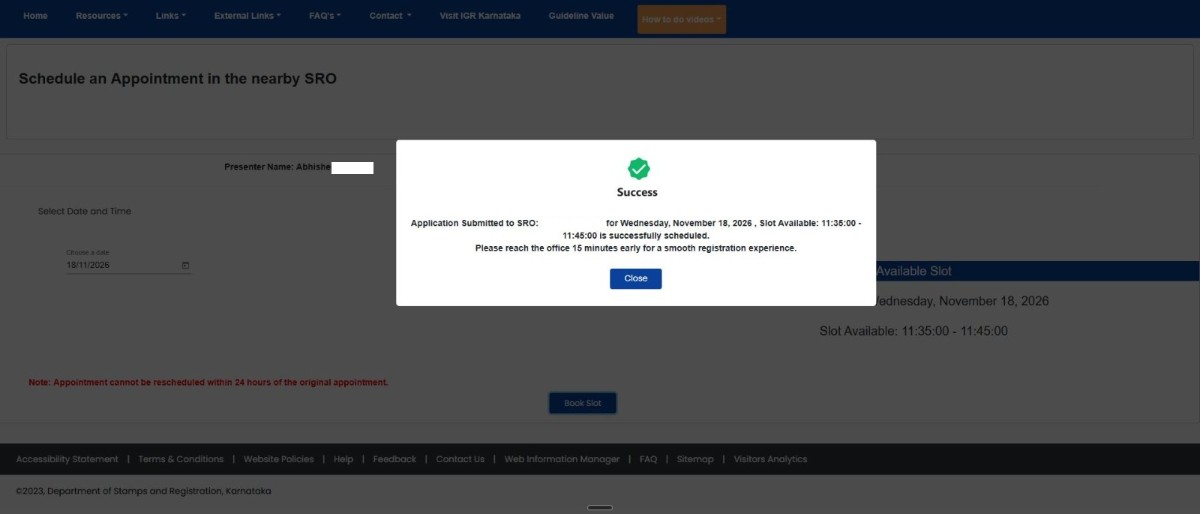
After payment, we validated the sellers' and buyers' PAN numbers and booked the registration slot on Kaveri Online Services.
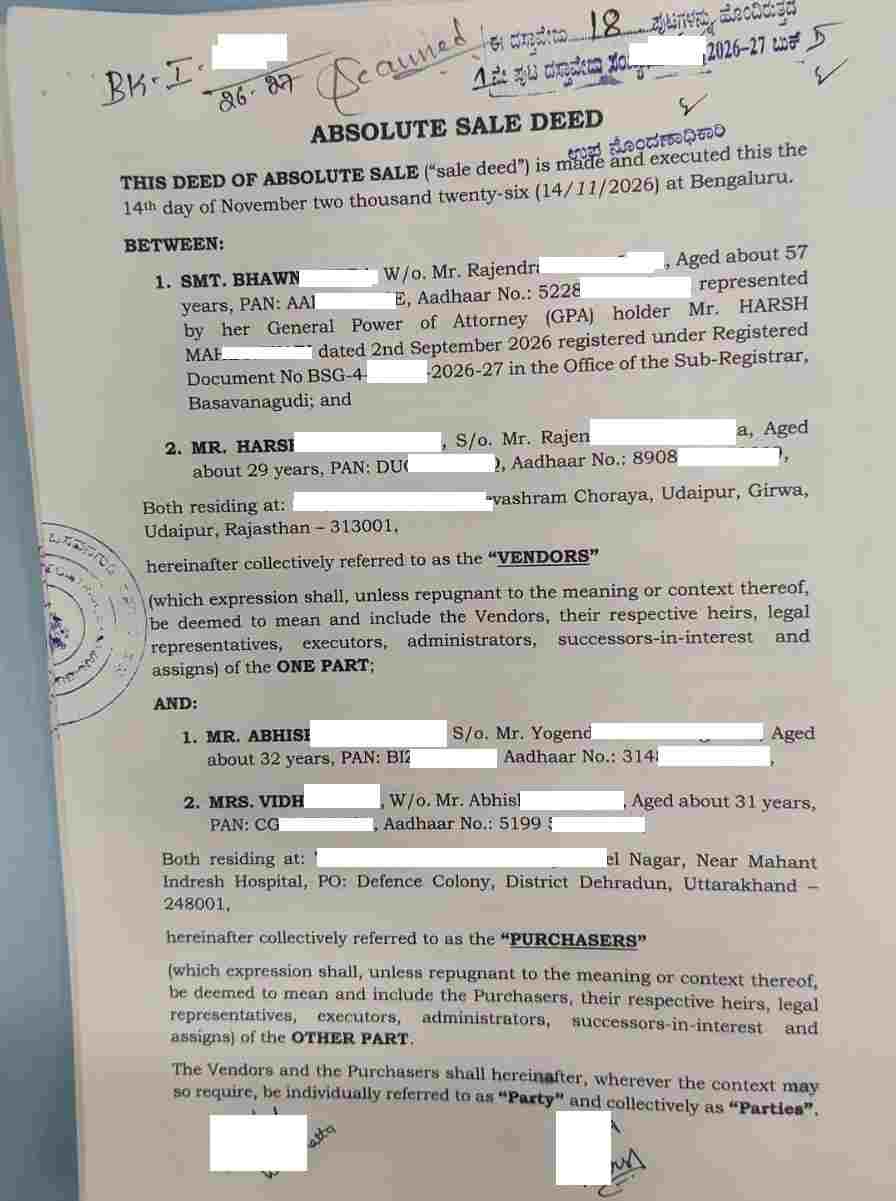
Step 7: Sale Deed Registration
At our registration slot, we carried these documents to the Sub-Registrar office:
- Printout of the application summary
- e-Khata
- Sale deed signed by the sellers, buyers and two witnesses
- Aadhaar of the sellers, buyers and witnesses
At the Sub-Registrar office, the sellers, buyers and witnesses had their photographs and thumb impressions recorded.
Step 8: MODT Registration (Only If Your Bank Requires It)
MODT stands for Memorandum of Deposit of Title Deed. It applies when the buyer takes a home loan, and it can be registered at the Sub-Registrar office.
In our case, the bank did not register an MODT. It collected the property documents from the buyers, including the registered sale deed, and handed over the loan amount as a Demand Draft (DD) to the sellers.
If Your Bank Requires MODT Registration: Steps to Follow
- Register the sale deed at the Sub-Registrar office.
- Wait for the e-Khata auto-mutation, which takes around 15 working days.
- Hand the registered sale deed to the bank.
- The bank hands the MODT to the buyer.
- The buyer registers the MODT at the Sub-Registrar office.
- The buyer hands the registered MODT back to the bank.
- The bank releases the loan amount to the sellers.
If you follow this procedure, the complete MODT process can take around 15 to 30 working days.
The Back-to-Back Alternative: Steps to Follow
Most sellers don't want to wait 15 to 30 working days for their money, so some buyers use this approach:
- Just before the sale deed application, the buyer collects the MODT from the bank.
- The buyer submits the sale deed application and then the MODT application, using the sellers' e-Khata, at the same Sub-Registrar office.
- The sale deed is registered, and then the MODT is registered at the same office.
- The buyer hands the registered sale deed and MODT to the bank.
- The bank releases the loan amount to the sellers.
With this approach, the sellers can receive the consideration on the day of registration, without waiting 15 to 30 working days.
Step 9: Final Payment and Loan Disbursement
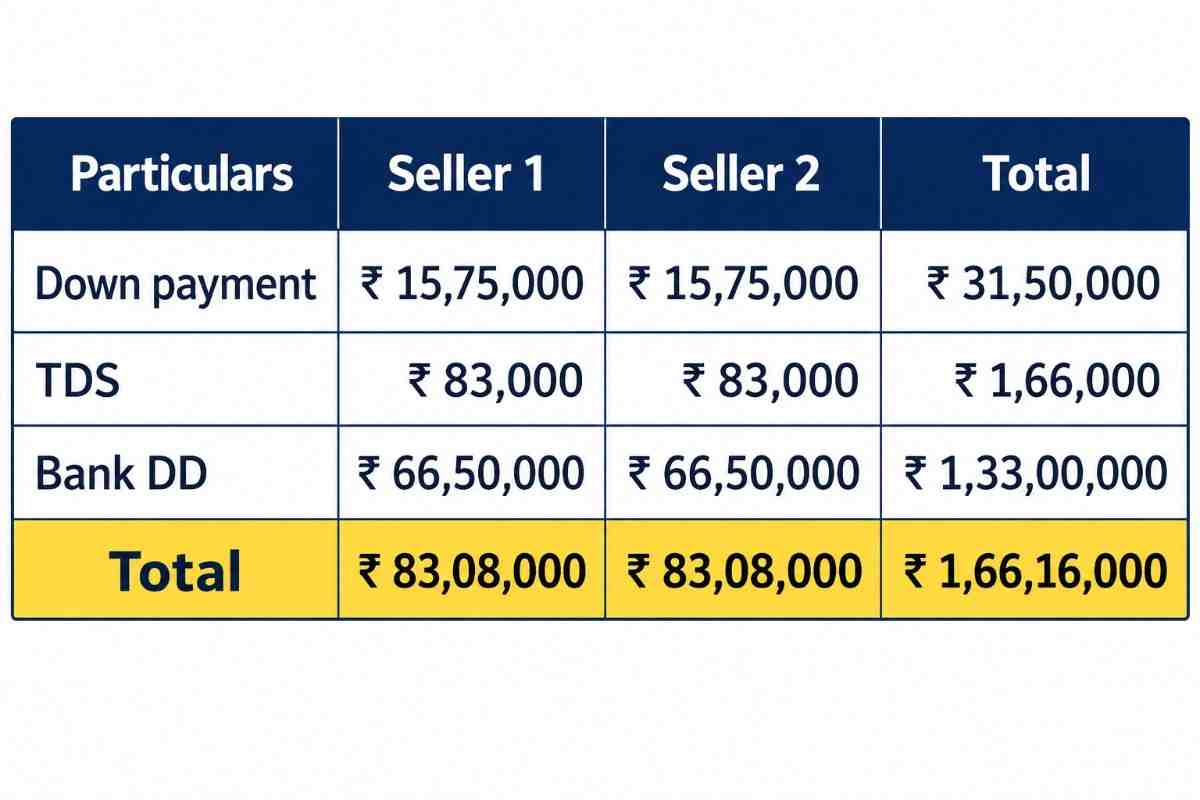
With multiple sellers, distribute the payment according to each seller's ownership share, or according to the ratio specifically agreed in the sale agreement or sale deed.
In our case, there were two sellers with 50% each, so we paid 50% to each.
The Biggest Challenge: Arranging Funds at the Last Moment
At the time of signing the sale agreement, we made a down payment of ₹16 lakh and expected a home loan of ₹1.5 crore, which together would cover the full ₹1.66 crore. However, the final sanctioned loan was only ₹1.33 crore.
But the biggest challenge was not the lower loan amount. It was the time constraint in arranging the funds at the last moment.
We worked on the home loan and the sale deed application in parallel. On one side, our home loan application was under process at the bank. On the other side, we had started working on the sale deed application. Once the sale deed application was approved, the bank representative confirmed that the final loan DD would be ready on 18 November, so we booked the registration slot for the same day.
At registration, the bank confirmed that the sanctioned loan was ₹1.33 crore, not ₹1.5 crore, because ₹1.33 crore was the maximum amount the bank could sanction based on the buyers' income proof. The buyers then had to arrange the balance of ₹15.34 lakh at short notice. Luckily, they had reserved funds and paid the sellers on time. Otherwise, it could have become a difficult situation.
The shortfall was ₹17 lakh in total: ₹15.34 lakh paid to the sellers and ₹1.66 lakh deposited as TDS. The TDS is part of the ₹1.66 crore consideration and not an extra cost.
Tip: ask the bank for the final sanctioned amount in writing, and confirm that it matches the amount the bank will disburse, before you book the registration slot.
Lesson: in my observation, many resale transactions run on multitasking because of pressure from the sellers or the buyers, such as working on the loan and the registration in parallel. Plan your down payment and loan amount precisely, so you aren't short of funds at the last moment.
Step 10: e-Khata Transfer (Auto-Mutation)
After the sale deed is registered, the e-Khata is transferred automatically from the sellers' names to the buyers' names. In our case, the names on the property tax receipt and the electricity records were also updated automatically within 15 working days.
Key Takeaways
- Verify the chain of ownership, the EC and the e-Khata before you pay.
- With multiple sellers, document each seller's share and split the payment and TDS accordingly.
- If an owner can't attend, a registered GPA (and, in our case, a life certificate) can help.
- Confirm the sanctioned loan amount before booking the registration slot.
- Ask your bank early whether it requires MODT registration.
Frequently Asked Questions
Do both sellers need to be present at registration?
In our case, the mother gave a registered GPA to the son because she might not be in Bangalore, and she also obtained a life certificate. Confirm the requirement for your case with your advocate.
How is TDS divided between two sellers?
We split the 1% TDS in line with the consideration. With a 50% share each, we deposited ₹83,000 in each seller's name.
Is MODT registration mandatory?
In our case, our bank didn't register an MODT. Banks differ, so check with yours.
Is the stamp duty paid on the sale agreement adjusted later?
In our case, we claimed an adjustment of the ₹83,000 stamp duty in the sale deed application.
How long does e-Khata transfer take?
In our case, about 15 working days.
What if the sanctioned loan is lower than expected?
You must arrange the difference immediately, so confirm the sanctioned amount before the registration date.