
When a home loan is fully repaid, it is crucial to formally remove the mortgage lien from the property records. In Karnataka, if a Memorandum of Deposit of Title Deeds (MODT) was registered at the time of availing the home loan, the lien can only be cleared by registering a Discharge Deed at the respective Sub-Registrar’s office.
WATCH THE COMPLETE STEP-BY-STEP VIDEO GUIDE
For a clearer understanding of the mortgage lien removal and Discharge Deed registration process in Karnataka, watch our detailed video below.
Here’s a step-by-step guide based on our real-life experience.
Step 1: Loan Closure and Document Collection
Upon repayment of the entire loan amount, the lender (usually a bank) will issue the following documents:
- Loan Closure Certificate
- Exemption Letter
- Discharge Deed
- Original Title Documents (which were deposited at the time of MODT registration)
EXPLANATION OF DOCUMENTS:
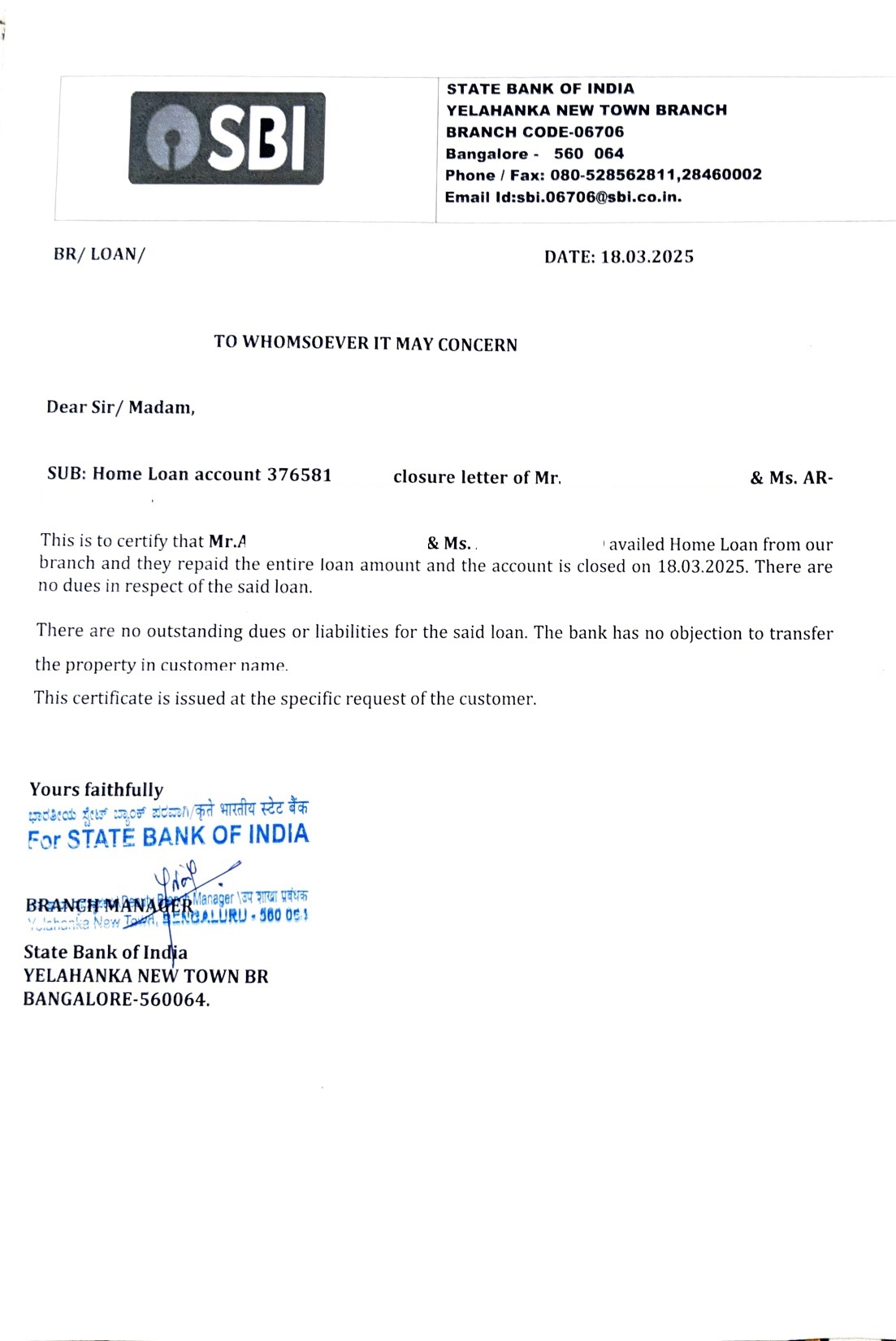
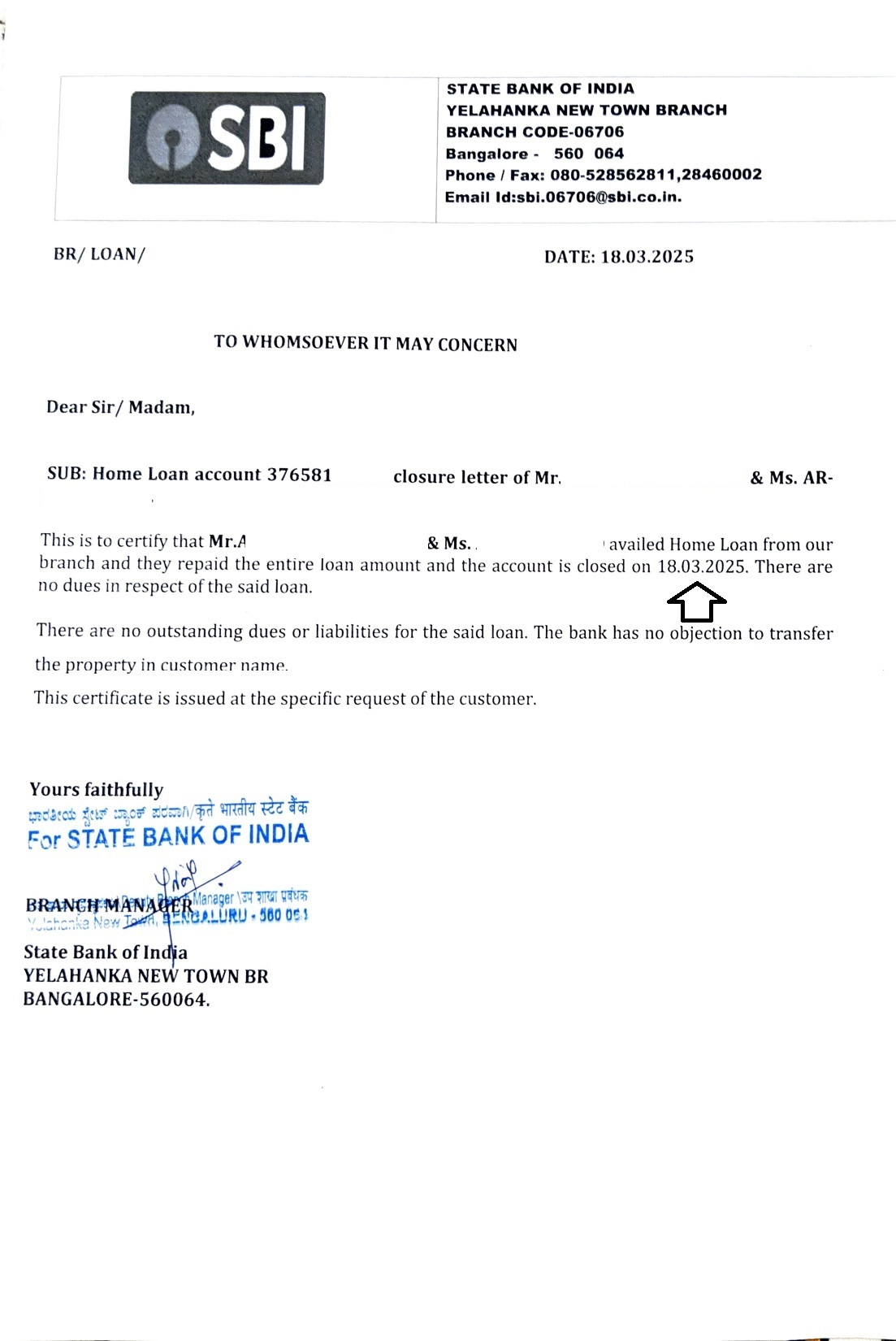
Loan Closure Certificate: A document from the lender confirming that the loan has been fully settled. Refer the closure letter from the State Bank of India
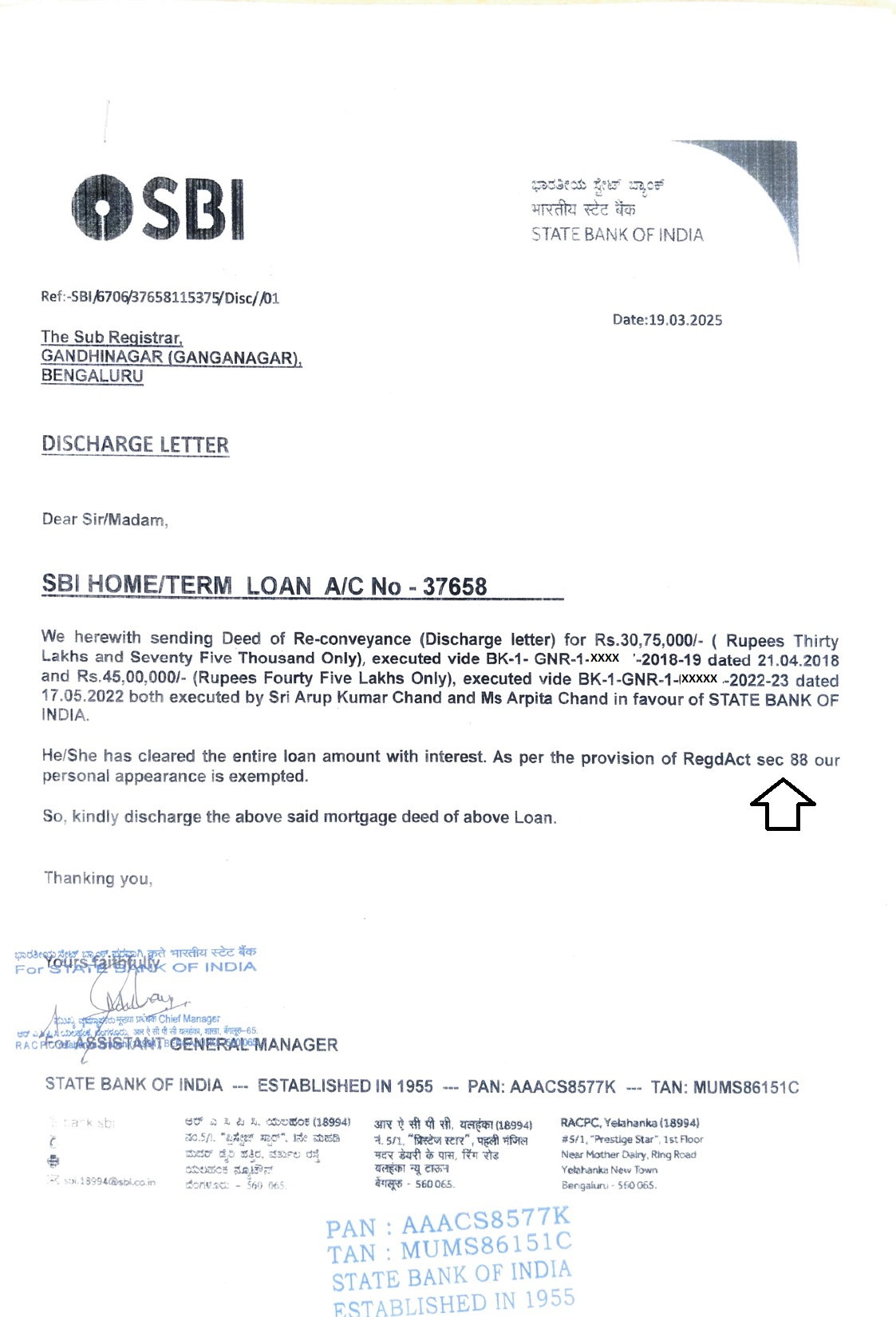
Exemption Letter: Issued under Section 88 of the Registration Act, 1908. It exempts the bank's representative from appearing physically at the Sub-Registrar’s office for registration.
(We’ve highlighted Section 88 in the image below for your reference.)
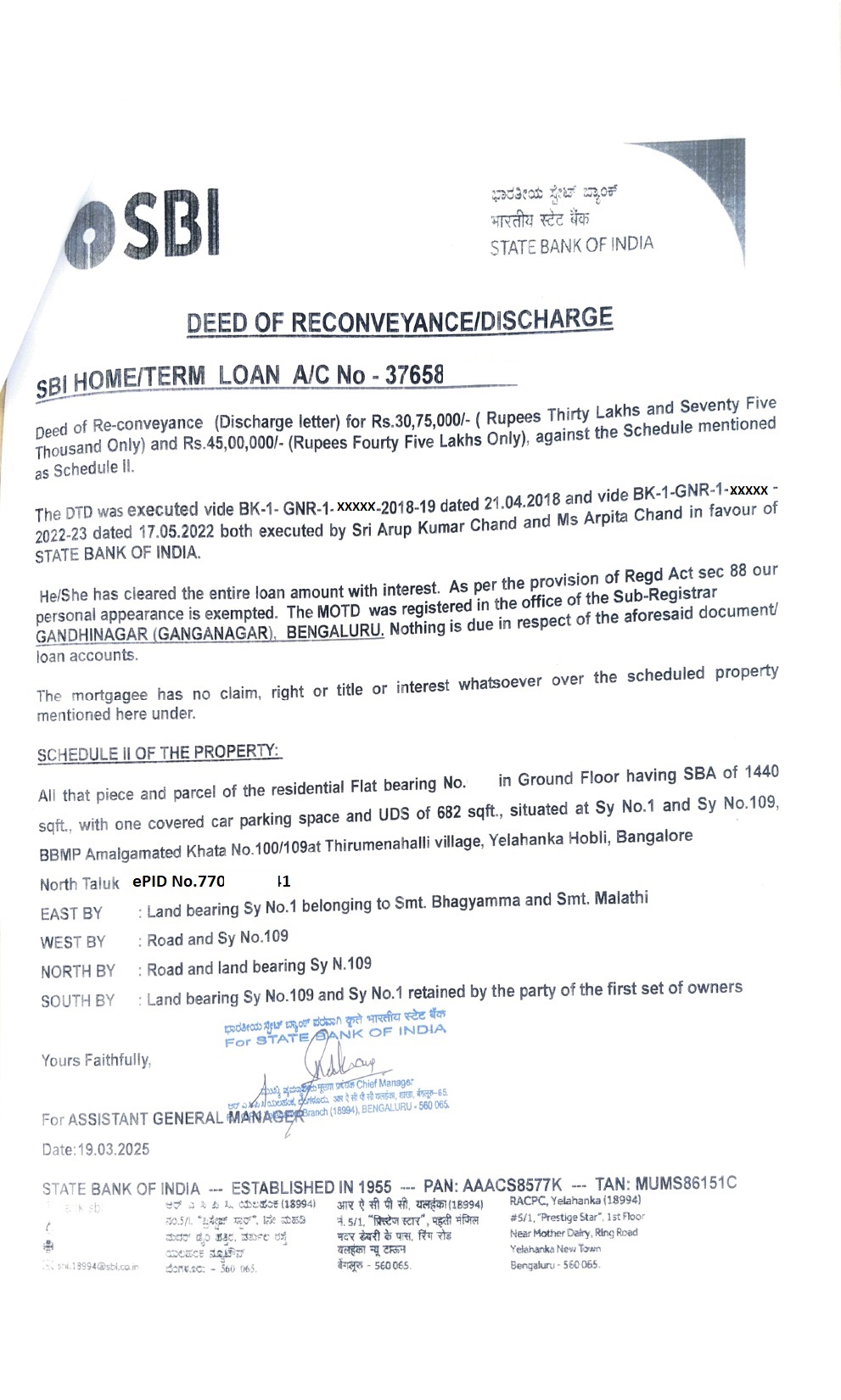
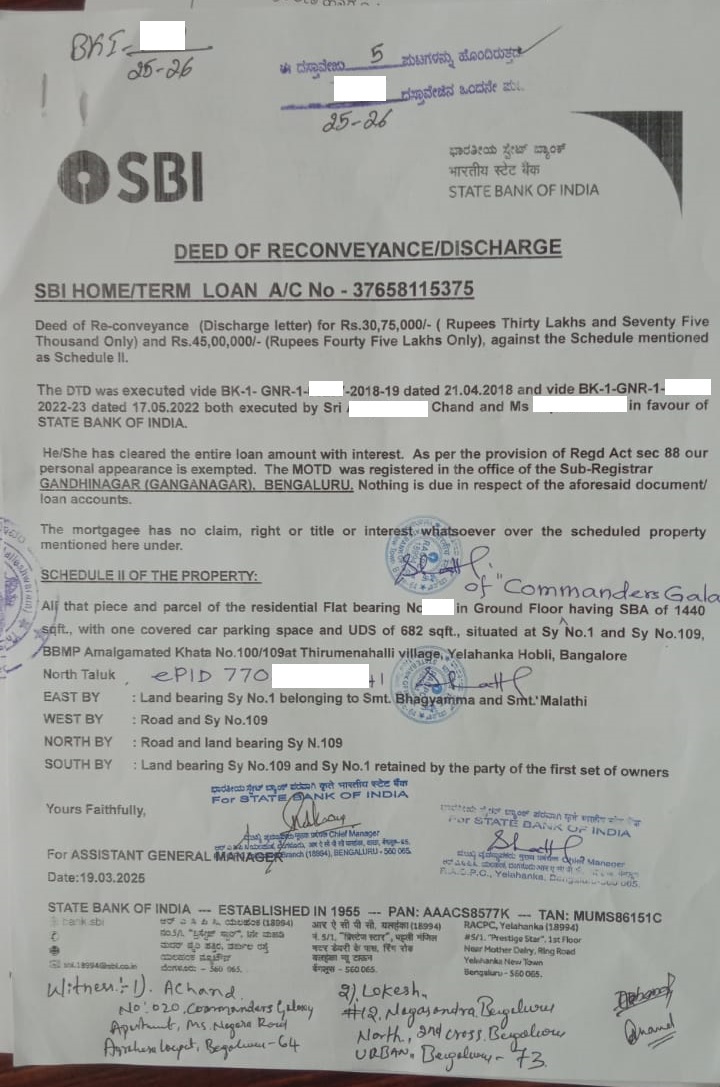
Discharge Deed: A legal document prepared by the bank acknowledging that the debt obligation is fulfilled. Refer to the below Discharge Deed
Title Documents: The original property documents, including the sale deed, which were submitted to the bank during MODT registration. These must be returned to the borrower.
Step 2: Real-Life Case Study Timeline
Here is an actual timeline to help you understand the process more clearly:
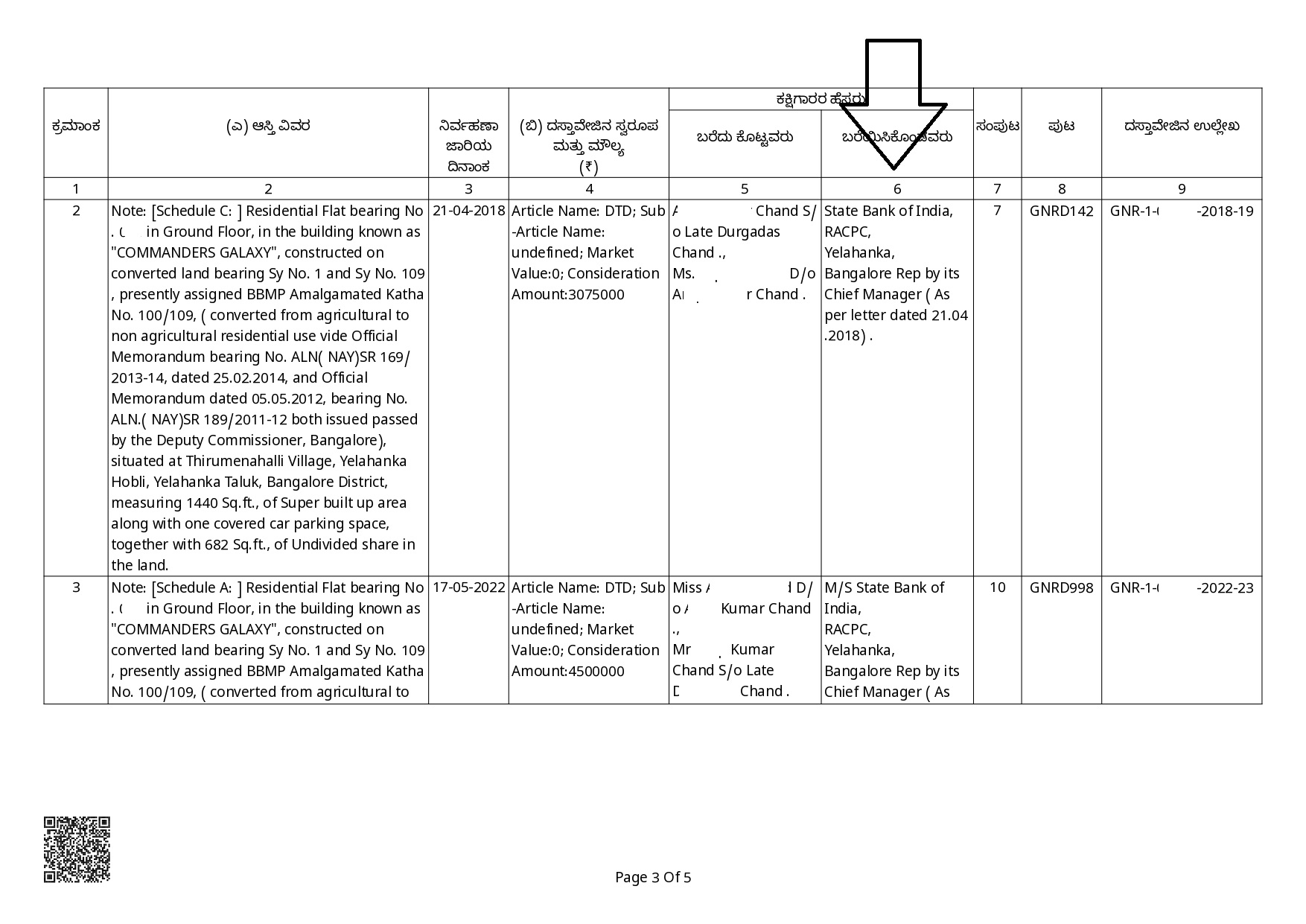
21-04-2018: Borrowed Rs.30,75,000 from SBI and registered the MODT at Ganganagar Sub-Registrar Office, Bangalore.
17-05-2022: Borrowed an additional Rs.45,00,000 and registered a second MODT with SBI in the same office.
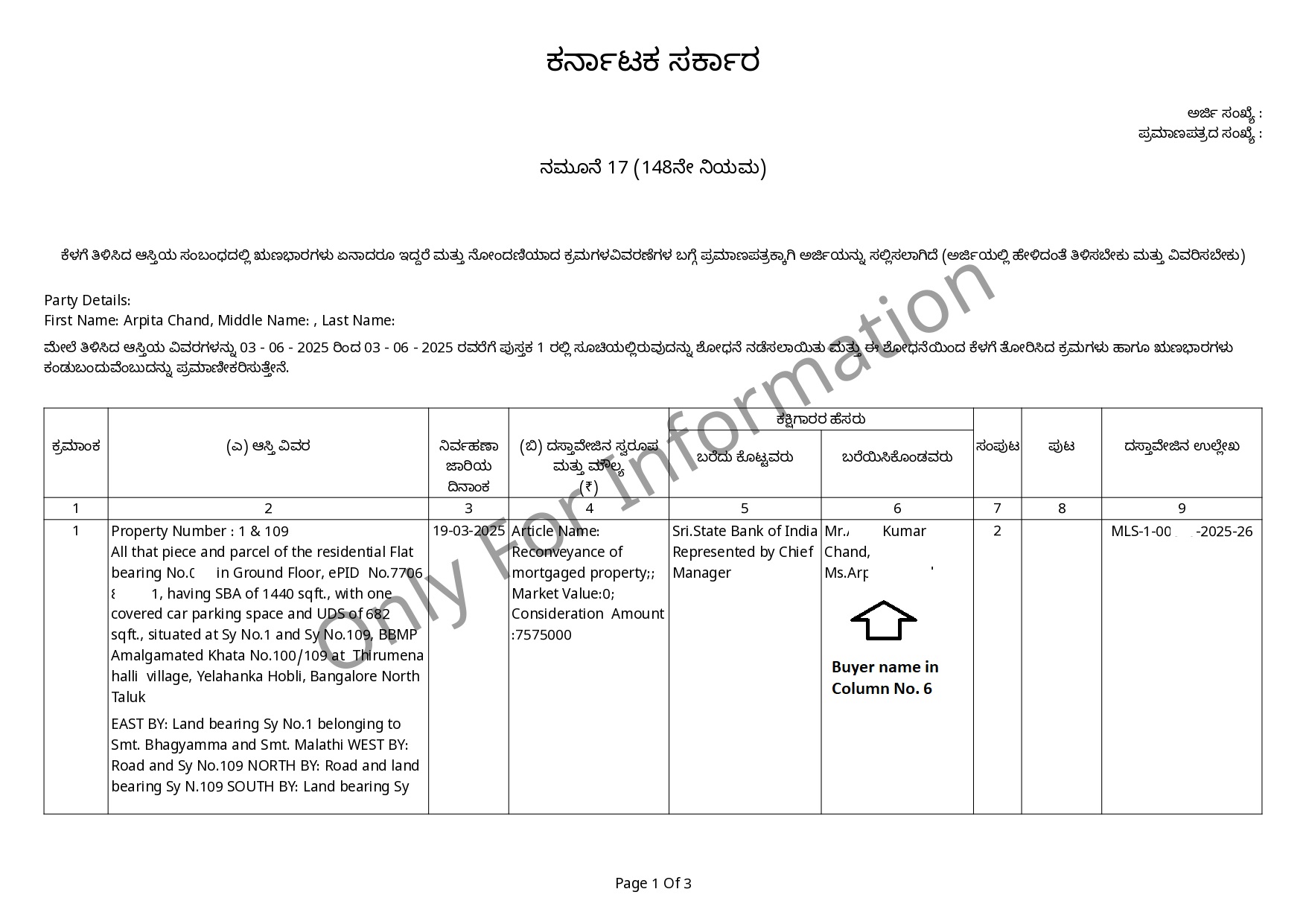
In the Encumbrance Certificate, column 5 represents the seller and Column 6 represents the buyer. Similarly, in the MODT EC entry, the bank's name appears in Column 6 (buyer). We highlighted the bank details below EC
18-03-2025: Paid off the entire outstanding loan amount. The settlement date has been highlighted in below loan closure letter
19-03-2025: Visited RACPC (Retail Assets Central Processing Centre) as directed by the bank and collected:
- Exemption Letter
- Discharge Deed
- Title Documents
NOTE: RACPC is where the bank stores original documents. Your home branch will notify you when and where to collect them.
Step 3: Submit Discharge Deed Application Online
Use the https://kaverionline.karnataka.gov.in Portal to initiate the discharge deed registration process.
- Submit the application.
- Pay applicable government fees.
- Book a registration slot at the respective Sub-Registrar’s office.
The following are the government fee:
- Stamp Duty: Rs. 200
- Registration fee: Rs. 200
- Scanning Rs. 50 per page
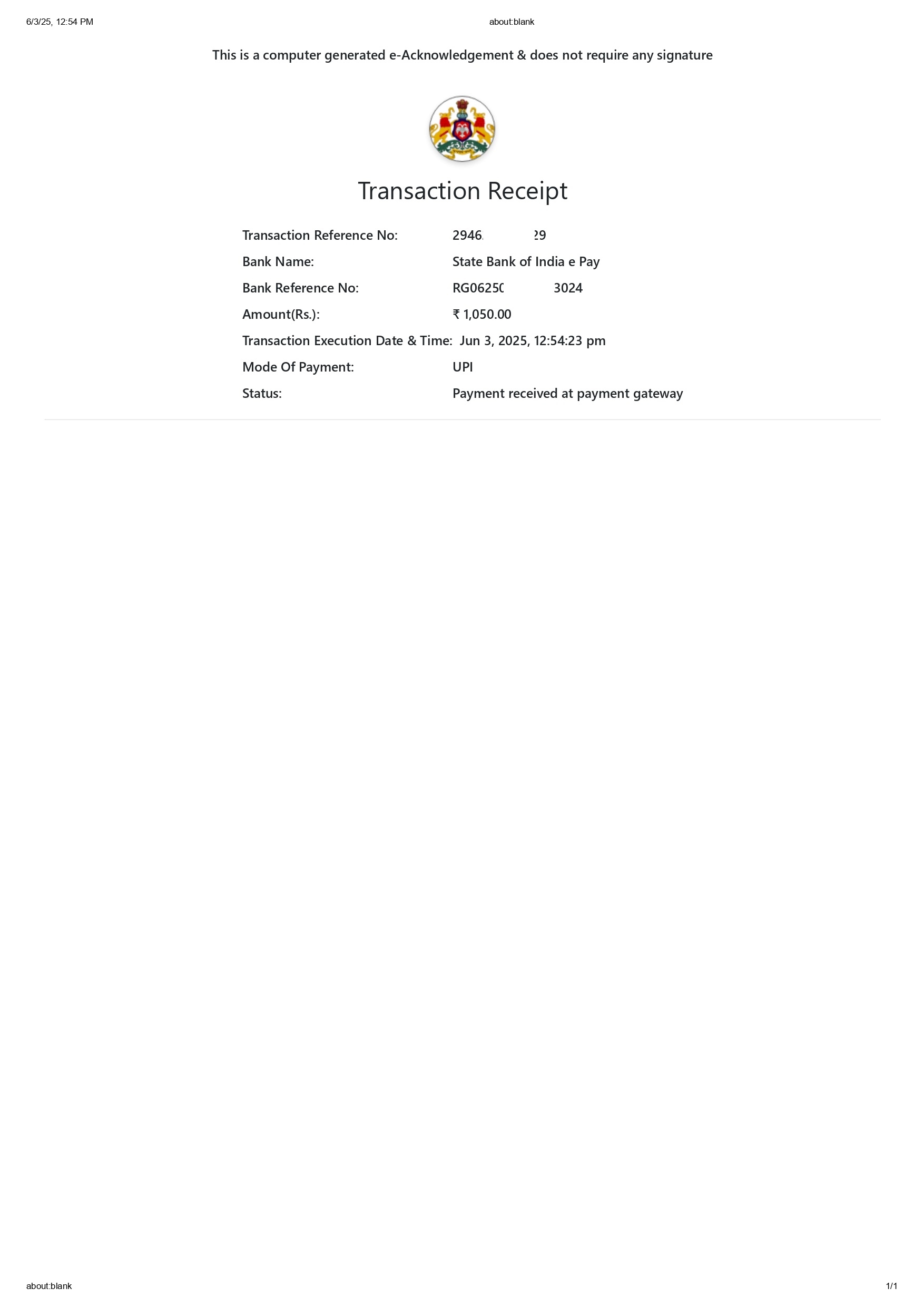
Below is a snapshot of our government payment receipt.
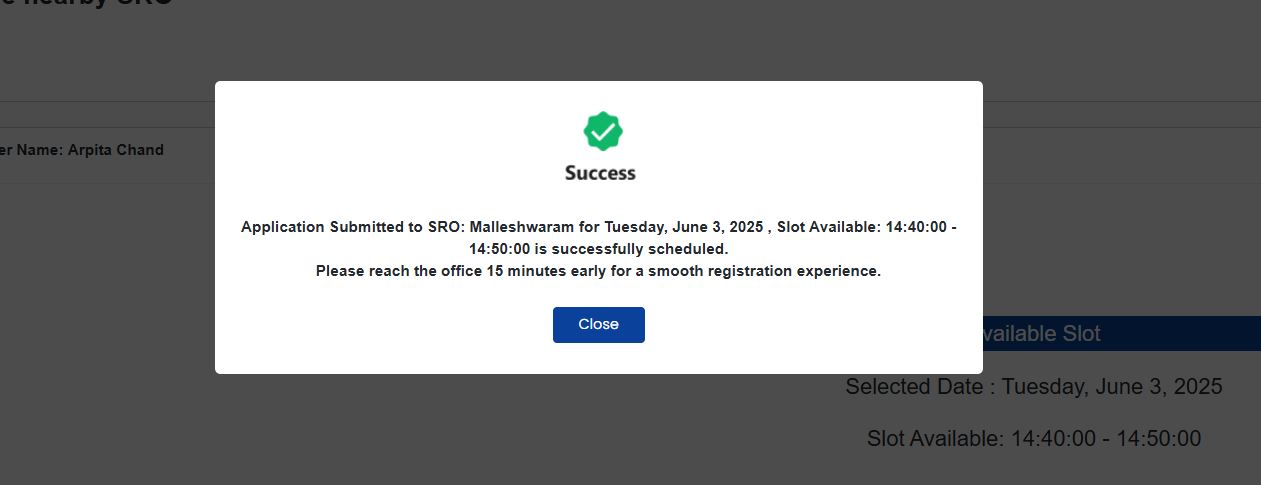
We booked a registration Slot on 03-06-2025, refer to below slot confirmation
Step 4: Attend Registration Appointment
On the appointed date, carry the following documents:
- Application Summary from Kaveri Portal
- Discharge Deed and Exemption Letter
- Aadhaar Card of the property owner
- Two witnesses along with their Aadhaar cards
- Government fee payment receipt
At the Sub-Registrar's office:
- The officer will verify the documents.
- Biometrics (thumb impression and photo) will be taken.
- OTP authentication will be completed to finalize the registration.
Once done, you will receive the Registered Discharge Deed. Refer to below Discharge Deed after registration.
Understanding the Encumbrance Certificate (EC):
- In the MODT EC entry, the bank's name appears in Column 6 (buyer).
- After registering the Discharge Deed, a fresh EC will show the bank’s name removed, and your name as the buyer in Column 6.
This confirms that the mortgage lien has been removed from the registry. We highlighted the buyer name in column 6 for your reference
Frequently Asked Questions (FAQ)
- What is a Discharge Deed, and when is it required?
A Discharge Deed is a legal document issued by the lender upon full repayment of a home loan. It formally acknowledges the fulfillment of financial obligations and allows for the removal of the mortgage lien registered via a Memorandum of Deposit of Title Deeds (MODT) at the Sub-Registrar’s office in Karnataka.
- Which documents does the bank provide after loan closure?
After repayment, the lender typically issues:
- Loan Closure Certificate
- Exemption Letter (under Section 88 of the Registration Act, 1908, which waives the bank’s physical presence for registration)
- Discharge Deed
- Original Title Documents (previously deposited during MODT registration)
- Do I need to register the Discharge Deed? Where and when?
Yes. The Discharge Deed must be registered at the same Sub-Registrar’s office where the original MODT was registered. The process should be completed within 90 days from the date you receive the Discharge Deed and related documents from the bank.
- How do I submit the Discharge Deed registration application?
Submit your application via the Kaveri Online portal (kaverionline.karnataka.gov.in), pay the government fees (Stamp Duty: Rs.200, Registration Fee: Rs.200, Scanning: Rs.50 per page), and book a registration slot at the Sub-Registrar’s office.
- What should I carry to the Sub-Registrar’s office on the registration day?
Be sure to carry:
- Application summary from the Kaveri portal
- Discharge Deed and Exemption Letter
- Property owner’s Aadhaar Card
- Two witnesses (along with their Aadhaar Cards)
- Government fee payment receipt
- What happens during the registration appointment?
The Sub-Registrar’s office will:
- Verify the documents
- Take biometric authentication (thumb impression and photo)
- Complete OTP-based authentication
- Once completed, you will receive the registered Discharge Deed.
- How can I confirm that the lien has been removed?
Obtain a fresh Encumbrance Certificate (EC) after registration. The bank’s name should no longer appear in Column 6 (Buyer), only your name will be listed, confirming successful lien removal.
- What if no MODT was registered earlier?
If no MODT was registered, the bank simply returns the title documents to you upon closure of the loan. In such cases, registering a Discharge Deed is not necessary.
- Is the presence of the bank necessary during registration?
No. The Exemption Letter suffices, and the bank’s representative does not need to be physically present at the Sub-Registrar’s office.
- Can someone else complete the process on my behalf?
Yes, you may assign a Power of Attorney (POA) to an authorized person, who can then collect documents from the bank and complete the Discharge Deed registration on your behalf.
- Why must registration occur within 90 days?
Registering the Discharge Deed within 90 days ensures legal validity and prevents procedural complications. Failure to do so may result in delays or additional formalities at the Sub-Registrar’s office
- Is e-Khata mandatory for Discharge Deed registration?
Yes. e-Khata is mandatory for Discharge Deed registration in Karnataka.
NEED ASSISTANCE?
We provide end-to-end assistance for Discharge Deed registration in Bangalore
- Write to us at pgnproperties@gmail.com
- WhatsApp us at +91-97424 79020