
MODT stands for Memorandum of Deposit of Title Deed. It is a mandatory document for most home loan borrowers in India.
WHAT IS MODT?
MODT is an undertaking by the borrower, confirming that the original property title documents are deposited with the lender (typically a bank or financial institution) as collateral for the home loan. This document contains details such as:
- Lender’s and borrower’s names
- Loan amount sanctioned
- Schedule of the property
- List of deposited title documents
Many banks insist that the MODT be registered at the sub-registrar’s office. This registration ensures the transaction is recorded publicly and is reflected in the Encumbrance Certificate (EC) of the property.
MODT REGISTRATION CHARGES IN KARNATAKA
When registering the MODT, two key charges are applicable:
- Stamp Duty: 0.5% of the loan amount
- Registration Fee: 0.1% of the loan amount
Additional minor charges include scanning/document handling fees.
REAL EXAMPLE: MODT CHARGES FOR A LOAN OF Rs.90 LAKHS
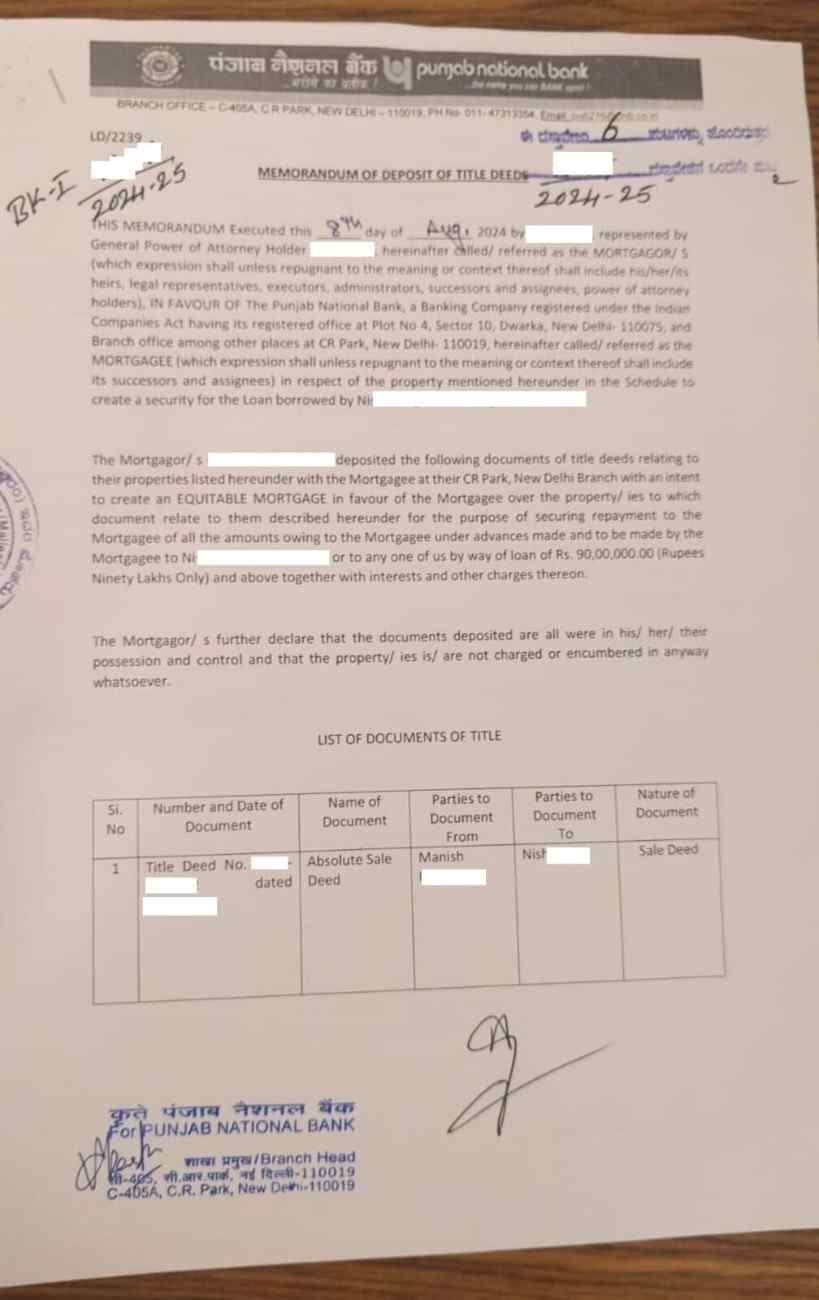
My client took a home loan of Rs. 90 Lakh from Punjab National Bank in Delhi to fund a property purchase in Bangalore. We highlighted the loan amount in the below MODT for your reference

To register the MODT at the sub-registrar's office in Bangalore, the following charges were applicable:
- Stamp Duty: 0.5% of Rs.90 lakhs = Rs.45,000
- Registration Fee: 0.1% of Rs.90 lakhs = Rs.9,000
- Scanning Fee: Rs.35 × 7 pages = Rs.245 (edit on 04th Aug 2025, the revised scanning fee os Rs. 50 per page)
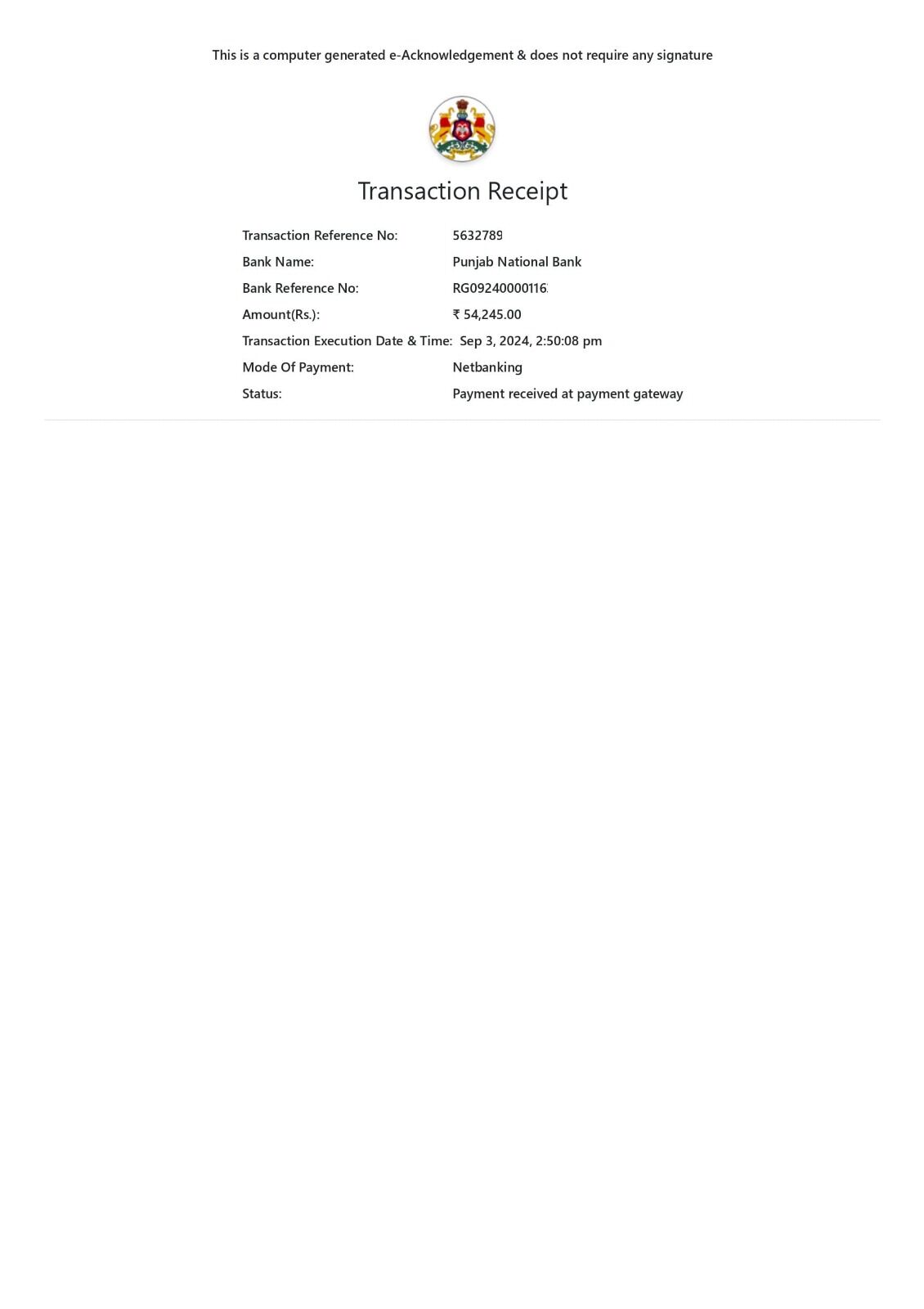
- Total Cost: Rs.54,245
According to my client, MODT registration charges in Delhi are capped at Rs.25,000, regardless of the loan amount. However, Bangalore does not follow such a cap, and in this case, the total cost of MODT registration came to Rs.54,245, which the client found considerably high. In an attempt to minimize expenses, she initially considered only submitting the property documents to Punjab National Bank (PNB), without registering the MODT. However, PNB did not accept this arrangement. They insisted that the MODT must be registered and an updated Encumbrance Certificate (EC) be submitted before releasing the loan amount.
The client later expressed that, had this requirement been clearly communicated during the early stages of the loan process, she might have tried to negotiate this condition with PNB. Unfortunately, since the loan had already been sanctioned and was at the disbursal stage, there was limited flexibility to make changes at that point.
Consequently, we proceeded with the MODT registration and paid the charges via net banking. The payment receipt is attached below for your reference.
We successfully registered the MODT at the sub-registrar’s office in Bangalore. Please refer to the registered MODT document provided below for your reference.
We downloaded the Encumbrance Certificate (EC) and have highlighted Punjab National Bank (PNB) in the document below for your reference.
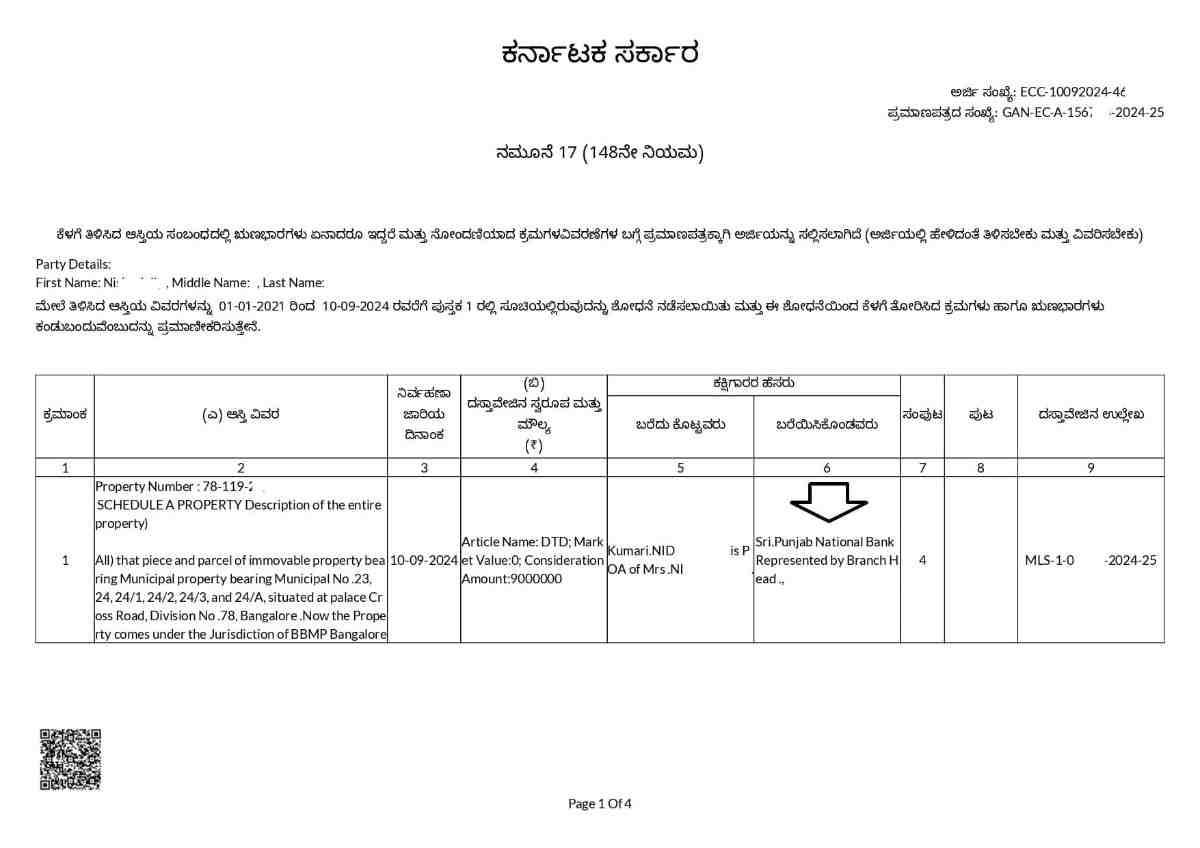
My client submitted the above Encumbrance Certificate (EC), the registered MODT, and the original title documents to Punjab National Bank (PNB), following which the loan amount was disbursed.
WHY MODT REGISTRATION IS NON-NEGOTIABLE FOR MOST BANKS
Although borrowers may prefer to avoid this cost, banks strictly require registered MODTs because:
- It prevents multiple loans being taken against the same property
- It prohibits sale of a mortgaged property without the bank’s consent
- It creates a public record of the mortgage in the property’s Encumbrance Certificate
MODT registration is thus a vital safeguard against property-related fraud and serves as a legal backbone for the lender’s interest.
We provide comprehensive assistance with MODT registration in Bangalore, encompassing documentation, coordination with the bank, and registration at the Sub-Registrar’s Office.
For inquiries, please write to us at pgnproperties@gmail.com or WhatsApp us at +91-97424-79020
FREQUENTLY ASKED QUESTIONS (FAQ) ON MODT REGISTRATION IN KARNATAKA
- What is MODT in home loans?
MODT stands for Memorandum of Deposit of Title Deed. It is a document confirming that the borrower has deposited the original property title deeds with the lender as security for the loan. - Is MODT registration mandatory in Karnataka?
Yes. Most banks in Karnataka insist on registered MODTs. Without registration, they will not disburse the loan, as the registration ensures the mortgage is reflected in the Encumbrance Certificate (EC). - How much are the MODT registration charges in Karnataka?
MODT charges in Karnataka include:
- Stamp Duty: 0.5% of the loan amount
- Registration Fee: 0.1% of the loan amount
- Scanning Fee: Rs. 50 per page (as of August 2025)
- Is there a maximum cap on MODT charges in Karnataka?
No. Unlike Delhi, where charges are capped at Rs.25,000 irrespective of the loan amount, Karnataka does not have such a ceiling. Charges are calculated as a percentage of the loan amount. - Who pays the MODT charges – borrower or bank?
The borrower is responsible for paying the MODT charges, unless the bank specifically agrees to bear them. - Where is MODT registered?
The MODT is registered at the jurisdictional Sub-Registrar’s Office where the property is located. - How is MODT registration reflected in the property records?
Once registered, the MODT is recorded in the Encumbrance Certificate (EC) of the property. The EC will mention the lender’s (bank’s) name, confirming the mortgage. - Can I avoid MODT registration by only submitting title deeds to the bank?
In most cases, banks will not release the loan without a registered MODT and an updated Encumbrance Certificate (EC). However, some banks may permit unregistered MODTs for smaller loan amounts. It is advisable to clarify this with your bank at the time of loan application. - Why do banks insist on MODT registration?
Banks require MODT registration to:
- Prevent multiple loans against the same property
- Restrict sale of mortgaged property without bank consent
- Create a public record of the mortgage in the EC
- Can I get professional help for MODT registration in Karnataka?
Yes. PGN Property can assist with documentation, bank coordination, and registration at the Sub-Registrar’s Office to ensure a smooth process.